Aug 24, 2026Skincare Packaging
Why Do Lotion Pumps Clog With Thick Formulas?
Learn why thick cosmetic formulas clog lotion pumps, how to diagnose restricted flow, and what to test before mass production.
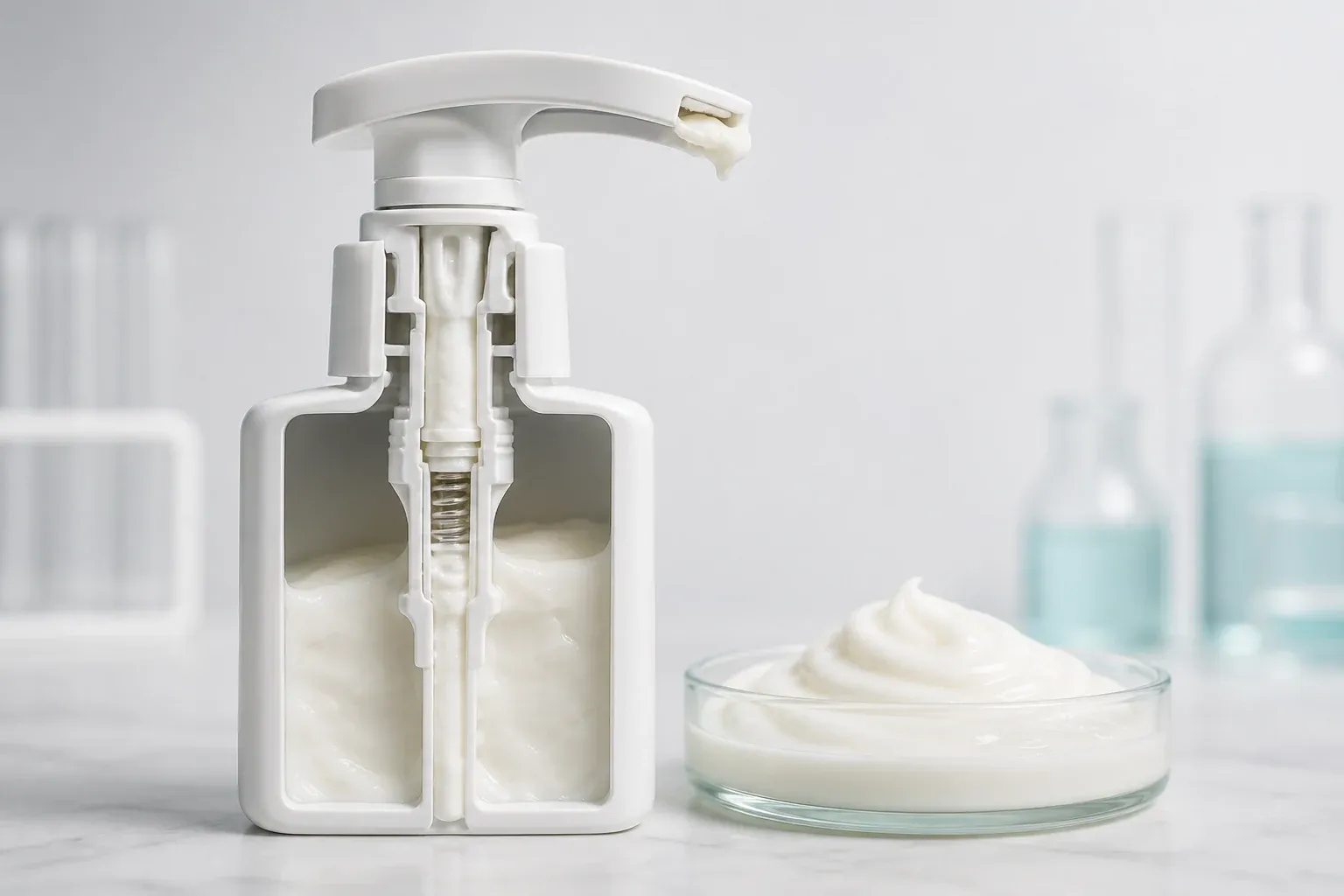
- Quick Answer: Lotion pumps clog with thick formulas when the product cannot move freely through the dip tube, inlet, pump chamber, valve, or nozzle. High viscosity, suspended particles, crystallization, an undersized flow path, and low storage temperatures can all contribute. The correct solution is to match the pump design to the actual formula and validate filled samples before mass production.
Why Thick Formulas Are Harder to Pump
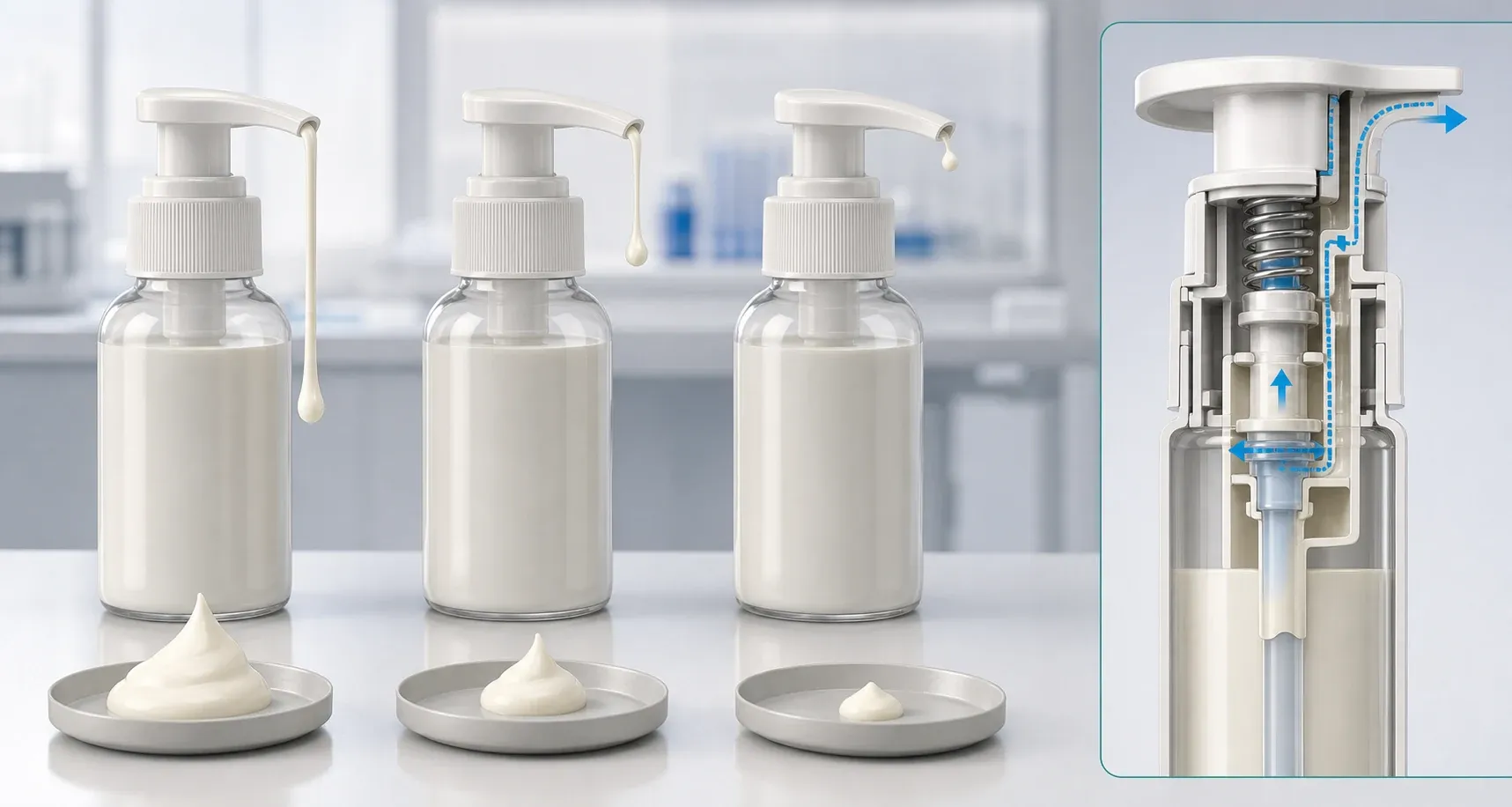
A lotion pump must create suction, draw product through the dip tube, fill a small chamber, and discharge a repeatable dose. Thick creams resist this movement more than low-viscosity liquids. If the product does not refill the chamber quickly enough, the actuator may recover slowly, output may fall, or the pump may dispense only after long pauses.
Viscosity is not the only factor. A formula can contain waxes, powders, beads, fibers, salts, or ingredients that crystallize around the nozzle. Even a pump that works during a warm filling trial may struggle after the product cools during storage or transport.
Common Causes and Solutions
Symptom Likely Cause What to Check Practical Response
Slow priming Formula is too viscous for the pump pathway Viscosity at use temperature, inlet and dip-tube diameter Test a pump designed for higher-viscosity products
Actuator returns slowly Chamber cannot refill quickly Spring recovery, chamber design, formula drag Compare full recovery time across representative samples
Nozzle blocks after storage Product dries or crystallizes at the outlet Nozzle residue, cap design, formula volatility Evaluate protective caps and clean-nozzle designs
Intermittent output Air pockets or poor sealing Closure fit, gasket, dip-tube connection Confirm bottle-neck compatibility and capping torque
Pump works warm but fails cold Viscosity rises at low temperature Performance at expected storage and use temperatures Run temperature-conditioned filled-sample tests
Visible particles block the pump Flow path is smaller than suspended solids Maximum particle size and distribution Use a suitable pump pathway or reformulate where appropriate
How to Diagnose the Problem
- Test the pump with water
A water test helps separate a damaged pump from a formula-related restriction. If the pump fails with water, inspect the dip tube, closure seal, actuator, and internal mechanism. If it works with water but not with the production formula, focus on viscosity, particles, temperature, and refill speed.
- Observe priming and actuator recovery
Record how many full strokes are required to prime the pump. Then measure whether the actuator returns fully between strokes. Short, rapid presses can hide a slow-refill problem, so use a consistent test rhythm and compare multiple pumps.
- Inspect the flow path
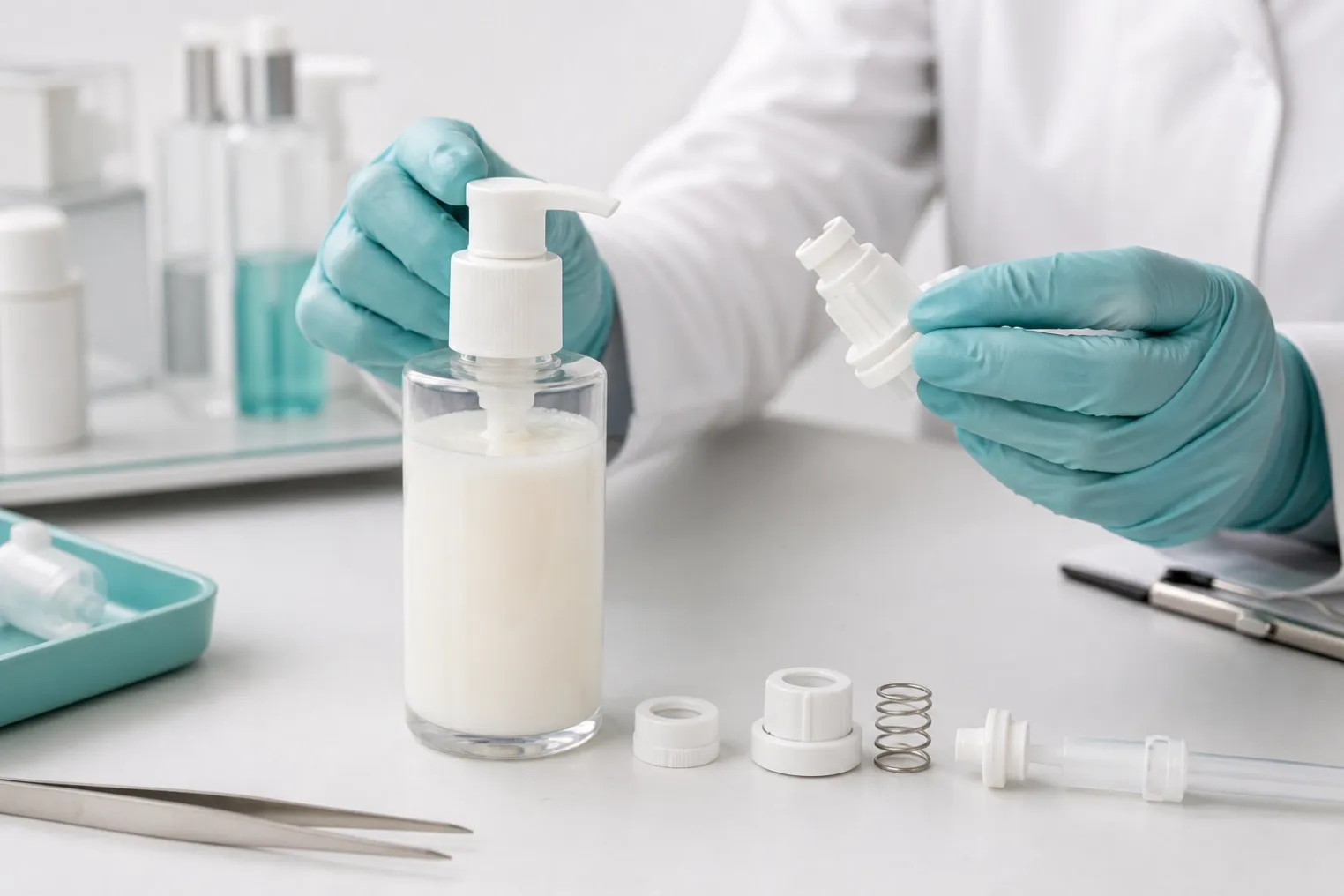
Check the dip tube cut, internal diameter, tube connection, pump inlet, chamber, valve, and nozzle. Residue concentrated at one location often indicates where the restriction begins. Do not enlarge or modify components during diagnosis unless the change is controlled and documented.
- Repeat the test at relevant temperatures
Many cosmetic formulas become thicker when cold. Condition filled samples at the temperatures expected during warehousing, transport, and consumer use. A pump approved only in a warm laboratory may not represent real-world performance.
Choosing a Pump for a High-Viscosity Formula
Ask the supplier for a pump intended for the formula's viscosity range and required dose. A larger flow path can help, but output volume, spring force, chamber design, sealing, nozzle geometry, and dip-tube specification must work together. The nominal neck size alone does not determine performance.
Define the required output per full stroke.
Share the formula type and viscosity range at relevant temperatures.
Disclose particles, powders, fibers, beads, or ingredients that may crystallize.
Confirm bottle neck finish, gasket, closure, and capping conditions.
Approve the final dip-tube length and cut style using filled samples.
Testing Before Mass Production
Use production-representative bottles, pumps, dip tubes, filling conditions, and formula. Test more than one component sample and define acceptance criteria before the trial starts.
Priming: Number of strokes before the first complete dose.
Output: Weight of several consecutive doses and allowed variation.
Recovery: Time for the actuator to return fully.
Life cycle: Repeated dispensing through the expected use period.
Storage: Performance after upright, side, and temperature-conditioned storage where relevant.
Compatibility: Changes in odor, color, swelling, cracking, leakage, or pump function over the agreed test period.
Buyer Checklist
Formula category and viscosity range
Filling, storage, shipping, and use temperatures
Maximum particle size and any crystallization risk
Required pump output and acceptable variation
Bottle material, neck finish, gasket, and capping torque
Dip-tube length, diameter, and cut style
Filled-sample test plan and approval standard
Common Mistakes to Avoid
Do not select a pump only from an empty-component sample. Do not rely on water testing as final approval. Avoid testing only at room temperature when the formula will encounter colder conditions. Do not assume every thick formula behaves the same: flow behavior, particles, and crystallization can matter as much as a single viscosity value.
Frequently Asked Questions
Why does the pump work at first and clog later?
Product may dry at the nozzle, crystallize, separate, or accumulate around a narrow valve or outlet. Storage temperature and incomplete actuator recovery can also reduce performance over time.
Can a larger dip tube solve the problem?
It may reduce resistance at the tube, but the inlet, chamber, valve, and nozzle must also handle the formula. The complete flow path should be evaluated.
How do I know if the formula is too thick?
Compare water and formula tests, document viscosity at relevant temperatures, and observe priming, actuator recovery, and dose consistency. A pump supplier can then recommend a more suitable design for filled-sample testing.
Can low temperature cause pump clogging?
Yes. Some formulas become substantially more viscous when cold, slowing chamber refill and increasing the chance of poor output.
Should every production batch be checked?
Incoming and line checks should follow the agreed quality plan. Formula and component variation can influence priming and output, so brands and fillers should define representative sampling and acceptance criteria.
Request a Pump Compatibility Review
Send AC PKG your formula type, viscosity range, particle information, capacity, bottle neck finish, required pump output, quantity, filling conditions, and target market. The team can help review a suitable bottle, pump, closure, and dip-tube combination before mass production.