Why Do Cosmetic Bottles Leak? 10 Common Causes and How to Prevent Them
Learn why cosmetic bottles leak, how to diagnose 10 common packaging failures, and what brand and filling teams can do to prevent them.
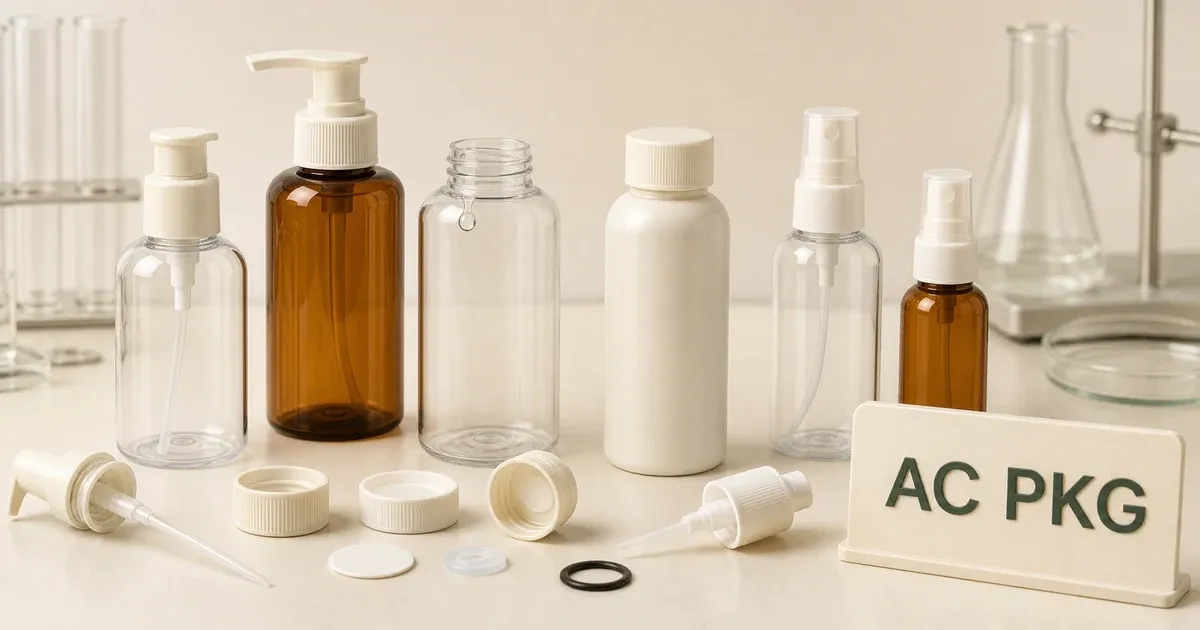
Cosmetic bottle leakage is rarely caused by the bottle alone. The failure may come from the neck finish, closure, pump, liner, gasket, dip tube, formula, filling process, capping torque, storage position, or transport conditions. Brands and filling factories should diagnose the complete packaging system before changing a single component.
Quick answer: Cosmetic bottles commonly leak because the bottle and closure do not match, sealing surfaces are damaged, torque is incorrect, liners or gaskets are unsuitable, pumps are not fully locked, formulas attack components, or shipping pressure and temperature expose weak seals. Test filled, production-representative packages in multiple orientations before mass production.
Why Cosmetic Bottle Leakage Matters
A small leak can stain cartons, damage labels, contaminate neighboring units, reduce fill weight, stop a filling line, and trigger customer complaints. Once product is filled, the cost is no longer limited to replacing empty packaging. It may include formula loss, refilling, relabeling, repacking, freight, warehouse handling, delayed launches, and product returns.
Leakage also weakens confidence between the brand, filler, and packaging supplier. The fastest route to a solution is a structured investigation based on samples, measurements, and test conditions—not assumptions about which party is responsible.
10 Common Causes of Cosmetic Bottles Leaking
| Cause | Typical evidence | What to verify |
|---|---|---|
| 1. Bottle and closure mismatch | Uneven engagement, loose fit, intermittent leaks | Neck finish, thread profile, dimensions, component drawing |
| 2. Incorrect capping torque | Closure backs off or neck deforms | Application torque, removal torque, line settings |
| 3. Damaged sealing surface | Leak follows a visible nick, flash, ovality, or scratch | Neck land, thread, mold condition, handling damage |
| 4. Wrong liner or gasket | Seal swells, hardens, slips, or loses compression | Material, thickness, compression, formula compatibility |
| 5. Pump not fully locked or seated | Leak near pump collar or actuator during transport | Lock position, closure engagement, overcap and collar |
| 6. Dip tube or pump assembly stress | Pump tilts, closure lifts, intermittent seal failure | Dip-tube length, cut angle, assembly alignment |
| 7. Formula incompatibility | Cracking, swelling, softening, odor, discoloration | All contact materials under actual storage conditions |
| 8. Fill level or headspace problem | Leak appears after temperature change or pump insertion | Net fill, brimful capacity, headspace, displacement |
| 9. Temperature or pressure change | Package passes room test but leaks in transit | Hot/cold cycles, altitude, vacuum and transport conditions |
| 10. Packing or handling damage | Leaks cluster near carton edges or damaged pumps | Dividers, orientation, carton strength, pallet pattern |
How to Identify the Leakage Point
Begin by cleaning and drying the complete package. Mark the fill level and closure position, then place the bottle on clean absorbent material. Test it upright, inverted, and on its side. Record where liquid first appears: bottle wall, base, neck land, thread, pump collar, actuator, vent, dip-tube connection, or cap opening.
Compare several samples rather than one bottle. If every unit leaks at the same interface, the cause may be systematic. If only a few leak, inspect dimensional variation, molding defects, component damage, assembly, and torque. Keep leaking and non-leaking controls from the same production lot.
Separate Bottle, Closure, and Formula Variables
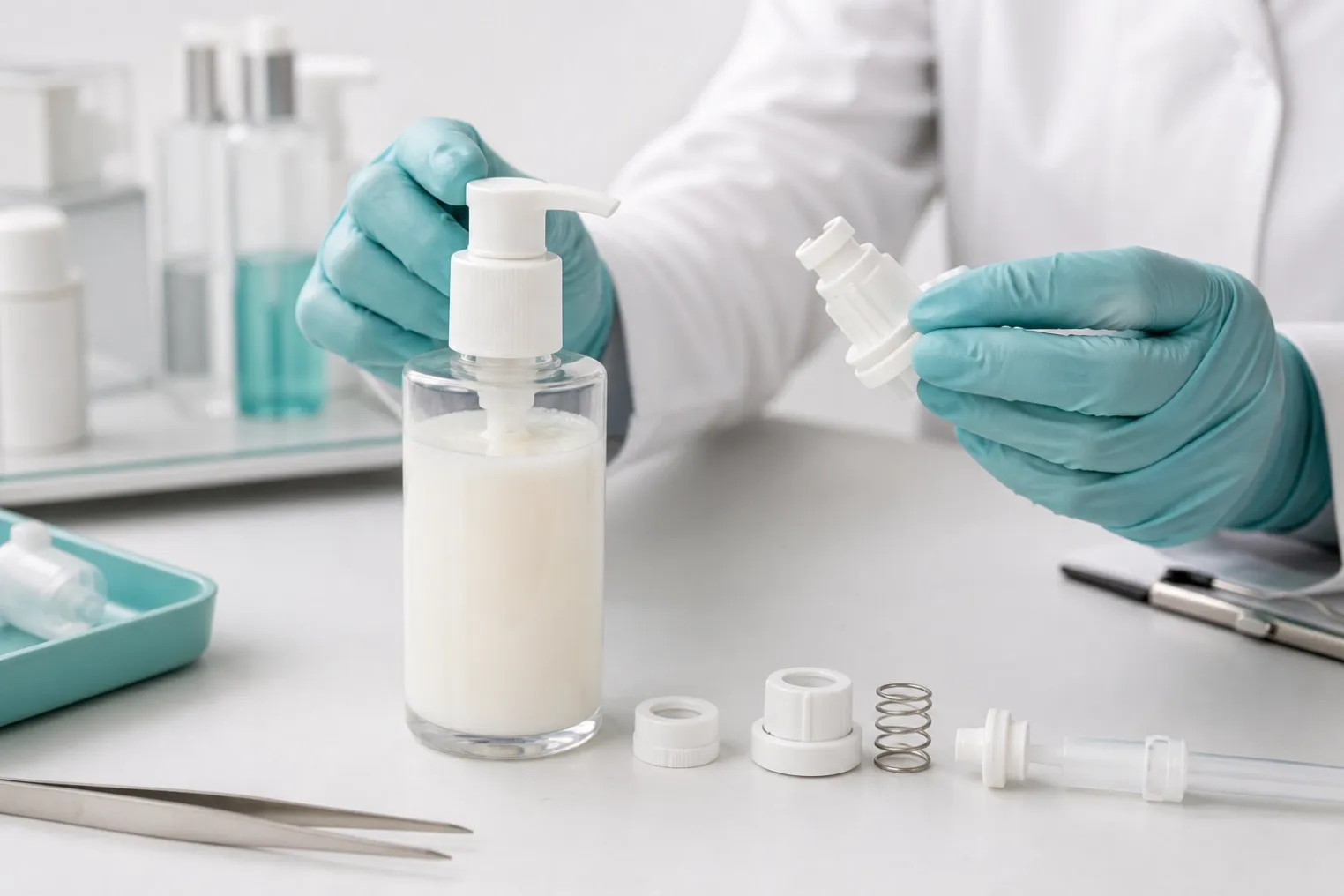
Use controlled swaps. Fit a known-good closure to a suspected bottle and a suspected closure to a known-good bottle. Test the actual formula and an appropriate control liquid separately when technically meaningful. Change only one variable at a time and document the result. Randomly changing multiple components may hide the real failure mechanism.
Capping Torque and Neck-Finish Compatibility
A closure that appears to fit may still have a different thread profile, seal geometry, or neck-finish tolerance. The bottle and closure drawings should be reviewed together. Critical dimensions may include neck diameter, thread start, thread height, neck land, sealing plug diameter, and closure depth.
Application torque must be high enough to create the intended seal but not so high that the bottle neck, liner, gasket, or closure deforms. Excess torque can strip threads, tilt pumps, crack necks, or permanently compress a liner. Low torque can allow the closure to loosen during vibration and temperature change.
Measure both application and removal torque using an agreed procedure. Record line speed, chuck condition, bottle support, closure temperature, and the time between capping and measurement. A hand-tight sample is not a substitute for a filling-line trial.
Formula, Headspace, and Pump-Related Risks
Oils, alcohol, fragrance, essential oils, solvents, acids, surfactants, and active ingredients may affect bottle resin, liners, gaskets, adhesives, decoration, and pump parts. Compatibility testing should use the actual formula and production-representative packaging. Watch for swelling, stress cracking, softening, weight loss, discoloration, odor change, and dispensing failure.
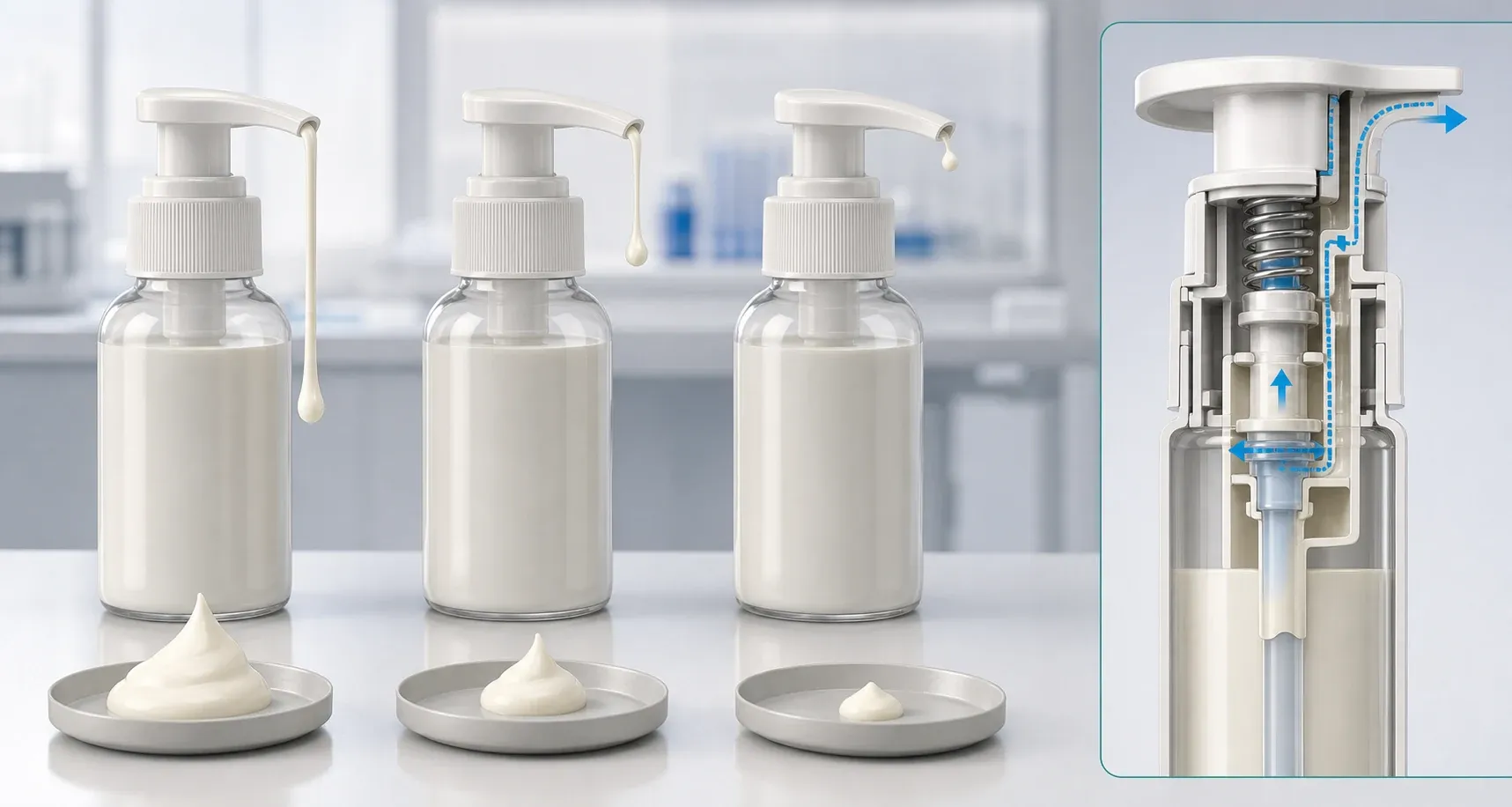
Headspace also matters. A bottle filled too close to brimful capacity leaves little room for formula expansion and pump displacement. Inserting a pump into an overfilled bottle can force product into the thread or vent area, creating a leak that looks like a sealing defect.
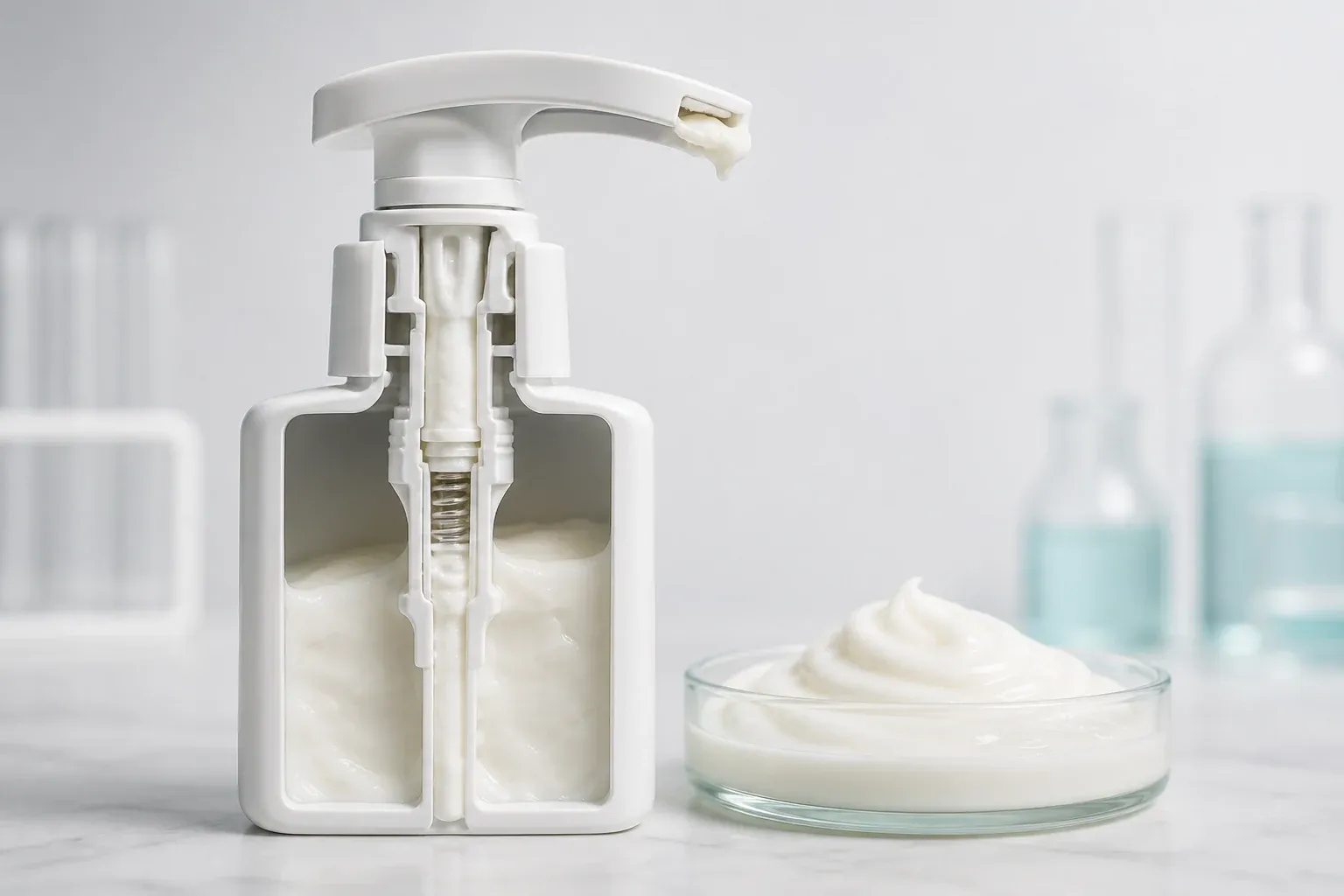
Dip tubes that are too long may bend strongly against the base and push the pump out of alignment. Tubes that are too short reduce evacuation. Confirm the cut length and angle with the exact bottle, pump, formula, and filling level.
Leakage Tests Before Mass Production
- Filled-package upright, side, and inverted storage
- Application and removal torque measurements
- Vacuum or pressure testing under a defined method
- Temperature cycling with the actual formula
- Vibration, drop, carton compression, and transport simulation
- Pump priming, output, rebound, locking, and evacuation checks
- Compatibility aging with production-representative components
- Pilot filling, capping, labeling, coding, and case-packing trials
Define the test method, sample size, duration, orientation, temperature, and acceptance criteria before starting. A package that passes one short room-temperature check has not necessarily been validated for export shipping or long-term storage.
AC Packaging recommends evaluating appearance and performance together before bulk purchasing. The related custom skincare packaging pre-production guide explains why bottle, pump, formula, filling, and transport checks should be coordinated.
Leakage Diagnostic Checklist for Buyers
- Identify the exact leak path and affected lot.
- Retain leaking and non-leaking samples.
- Check bottle and closure drawings and lot traceability.
- Measure neck dimensions, closure engagement, and torque.
- Inspect liner, gasket, plug, sealing land, threads, and pump collar.
- Confirm fill weight, headspace, pump displacement, and dip-tube length.
- Repeat testing with the actual formula and transport conditions.
- Use written change control before replacing any component.
When requesting corrective action, provide photos, videos, lot numbers, sample quantity, leak location, formula category, filling date, torque data, storage orientation, temperature history, and shipping conditions. A complete record helps the supplier reproduce the failure.
How AC Packaging Supports Leakage Prevention
AC Packaging supplies cosmetic bottles, airless bottles, lotion bottles, droppers, jars, tubes, pumps, caps, closures, and related components. Support may include component matching, samples, color and decoration development, production specifications, and custom molds for suitable projects.
Standard custom projects generally start around 10,000 pieces, but actual MOQ depends on the item, material, color, decoration, pump or closure, and production method. Buyers should request a quotation using one complete package specification.
Learn more about the company and packaging scope on the AC Packaging company page, or contact AC Packaging with your bottle, closure, formula category, capacity, quantity, filling process, and target market.
Frequently Asked Questions
How can I tell whether leakage comes from the bottle, closure, or pump?
Clean and dry the package, test it in several orientations, and record where liquid first appears. Compare leaking and non-leaking samples, inspect sealing surfaces, and perform controlled component swaps. Change one variable at a time. Dimensional measurements and torque data are more reliable than judging the package by appearance alone.
Should filled samples be tested before mass production?
Yes. Empty-package testing cannot reproduce formula interaction, pump displacement, headspace, filling contamination, temperature expansion, or long-term storage. Use the actual formula and production-representative bottles, closures, pumps, liners, gaskets, decoration, and labels. Agree on methods and acceptance criteria with the filler and supplier.
Can shipping temperature or altitude make bottles leak?
Yes. Temperature changes can expand product and trapped air, while pressure changes can challenge weak seals. Vibration may also loosen closures or damage pumps. Test representative filled packages under the expected logistics conditions, including orientation, temperature cycles, vacuum or pressure, vibration, drop, and carton compression.
Does tightening the cap more always stop leakage?
No. Excess torque can deform liners, strip threads, tilt pumps, crack bottle necks, or damage the sealing interface. The correct torque depends on the bottle and closure design, materials, liner or gasket, and filling line. Establish a validated application-torque range and monitor it during production.
Can a liner or gasket solve every leakage problem?
No. A liner or gasket only works when its material, thickness, compression, geometry, and formula compatibility match the package. It cannot correct damaged sealing surfaces, incompatible threads, excessive headspace pressure, poor capping, or a cracked bottle. Diagnose the complete system before adding or changing a seal.
What information should I send a packaging supplier about a leak?
Send the bottle and closure codes, lot numbers, formula category, fill weight, filling date, torque settings, leak location, affected quantity, storage orientation, temperature and transport history, plus clear photos or video. Retain leaking and non-leaking samples so the supplier can compare dimensions, assembly, and performance.
Request a Bottle and Closure Review
Contact AC Packaging with the formula type, bottle capacity, material, pump or closure, fill level, order quantity, filling method, leak location, and target market. The team can review existing component options, recommend samples, and help define the checks required before production.