Aug 23, 2026Skincare Packaging
Why Is Lotion Pump Output Inconsistent?
Learn why lotion pump output varies, how to diagnose priming, viscosity, venting and dip-tube problems, and what buyers should test before production.
Why Is Lotion Pump Output Inconsistent?
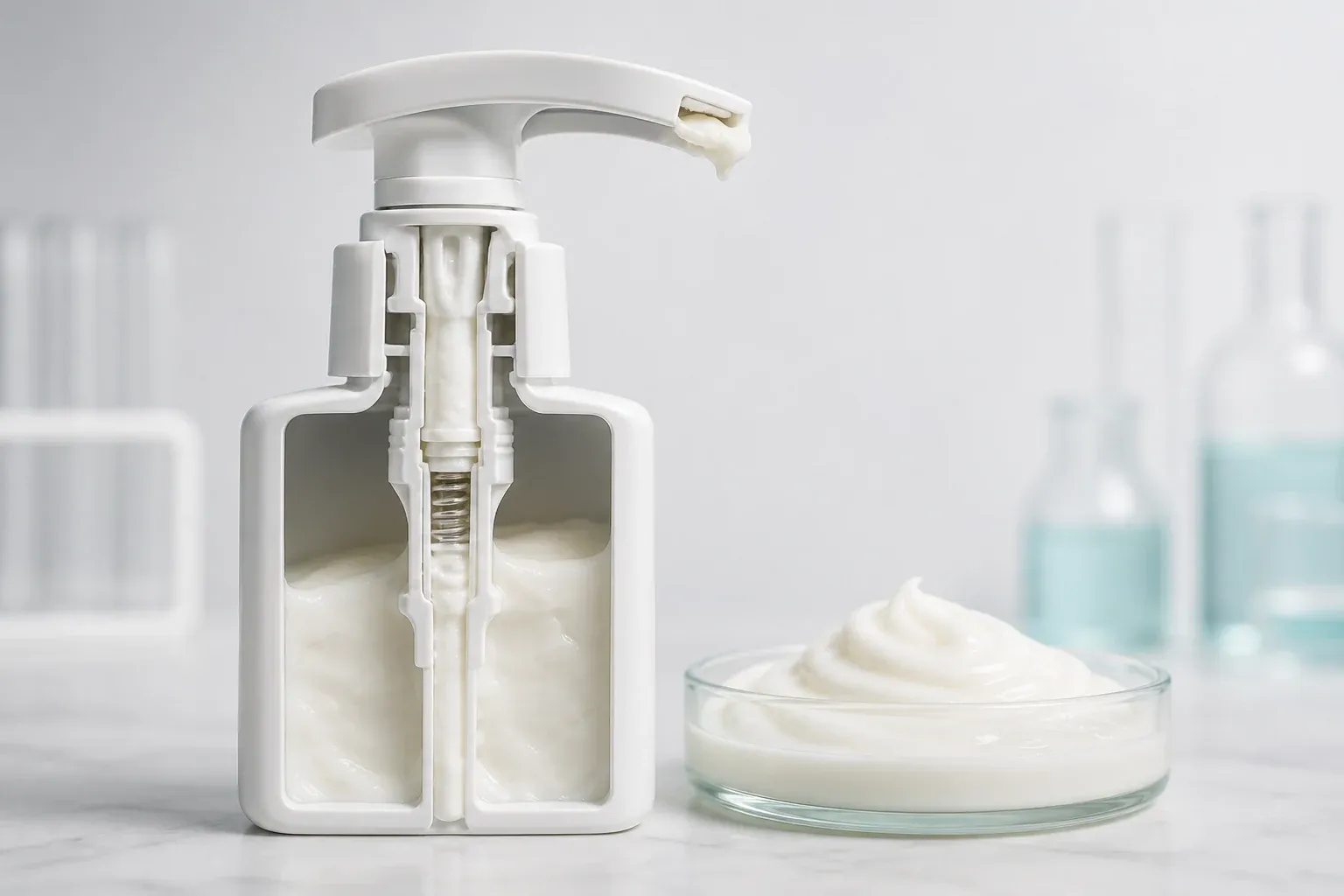
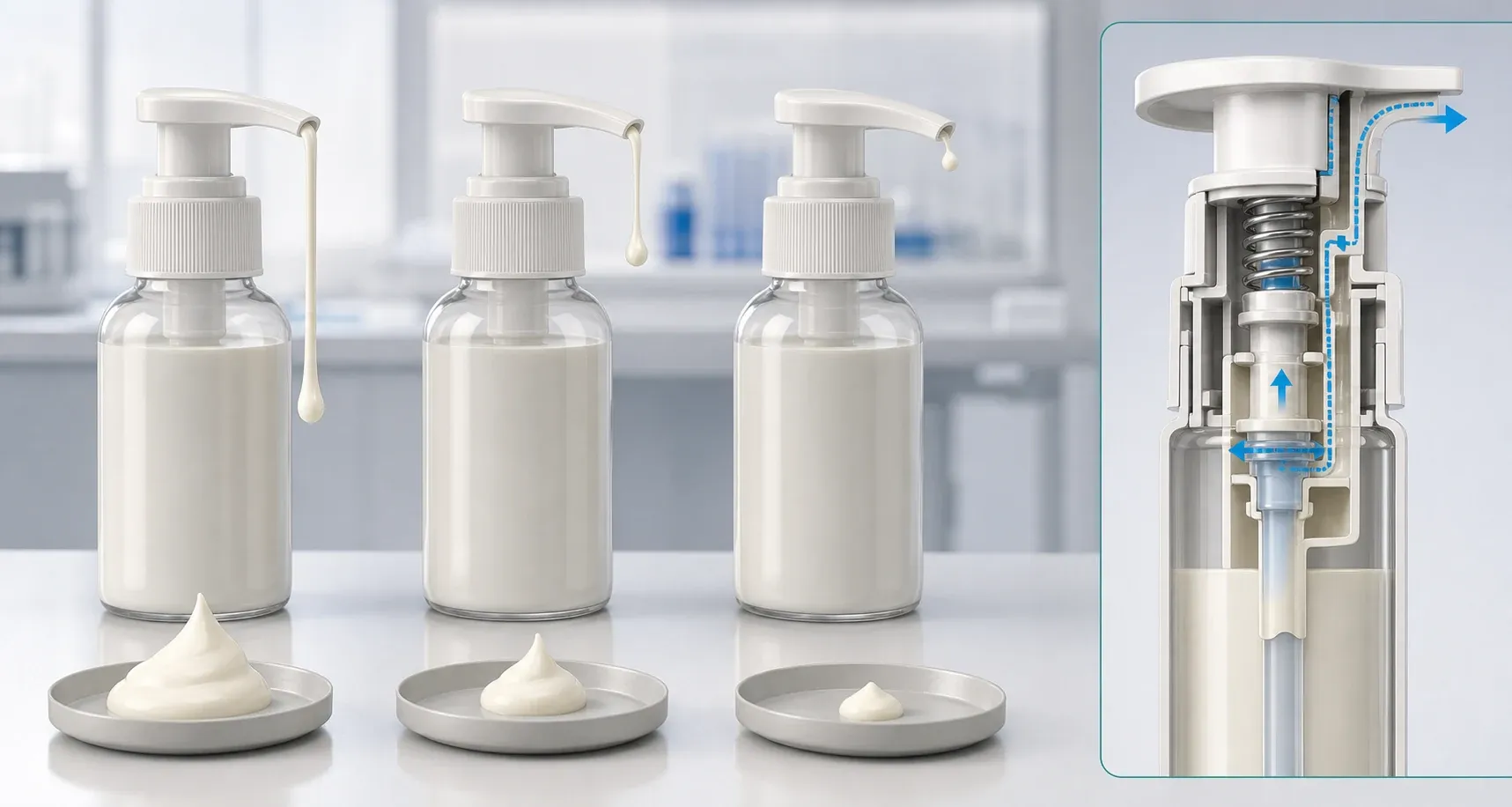
Inconsistent lotion pump output usually comes from incomplete priming, formula viscosity changes, air entering the system, an unsuitable pump engine, dip-tube errors, or variation in assembly and actuation. Brands should test the exact formula, bottle, pump, dip tube, fill level, and operating conditions together, measuring repeated full strokes after a defined priming procedure before approving mass production.
Why Pump Dose Consistency Matters
Pump output affects consumer experience, dosage claims, product usage rate, filling-cost calculations, and perceived package quality. A pump that delivers a large dose on one stroke and a small dose on the next can cause complaints even if it never leaks. For filling factories, inconsistent output may also signal trapped air, poor component fit, formula separation, or damage introduced during capping and handling.
Output should not be judged from one or two hand presses. A useful evaluation defines how the pump is primed, whether each stroke is fully depressed and released, the interval between strokes, the formula temperature, the bottle orientation, and how the dispensed mass or volume is measured.
Common Causes of Lotion Pump Output Problems
1. The pump is not fully primed
The first strokes remove air from the pump chamber and dip tube. If testing begins before a stable product column reaches the chamber, early doses will appear small or irregular. Record the number of strokes required to prime and begin output measurement only after a consistent flow is established.
2. Formula viscosity is outside the pump's practical range
Thick lotions may fill the chamber slowly, especially when the consumer presses repeatedly without allowing full recovery. Very thin formulas can expose valve or sealing limitations. Viscosity also changes with temperature, so a combination that works in a warm laboratory may behave differently in a cold warehouse or bathroom.
3. The actuator is not completing a full stroke
Partial depression produces a smaller dose. A stiff actuator, limited headspace in a protective cap, awkward bottle geometry, or rapid user action can prevent a complete stroke. Testing should include full-stroke and realistic-use evaluations rather than relying on one operator's technique.
4. Air enters through the dip-tube connection or pump seals
A loose, split, or poorly fitted dip tube can draw air instead of product. Similar symptoms can occur if internal valves do not seal correctly. Look for bubbles, loss of prime, sputtering, or delayed recovery after the actuator is released.
5. Dip-tube length or cut angle is unsuitable
A tube that is too short leaves product inaccessible. A tube that is too long may bend against the bottle base, block its opening, or create inconsistent suction. The tube cut, stiffness, curvature, and bottle base geometry should be specified together.
6. Bottle venting is restricted
Many dispensing systems need air to replace the product leaving the bottle. If the vent path is blocked by the formula, an overly tight interface, component variation, or bottle deformation, negative pressure can build and reduce later doses.
7. Product contains particles or separates
Suspended powders, beads, crystals, or poorly dispersed ingredients may restrict valves and flow paths. Formula separation can also make output vary over storage time. The pump should be assessed with representative aged samples, not only freshly mixed bulk.
8. Pump components vary or are damaged
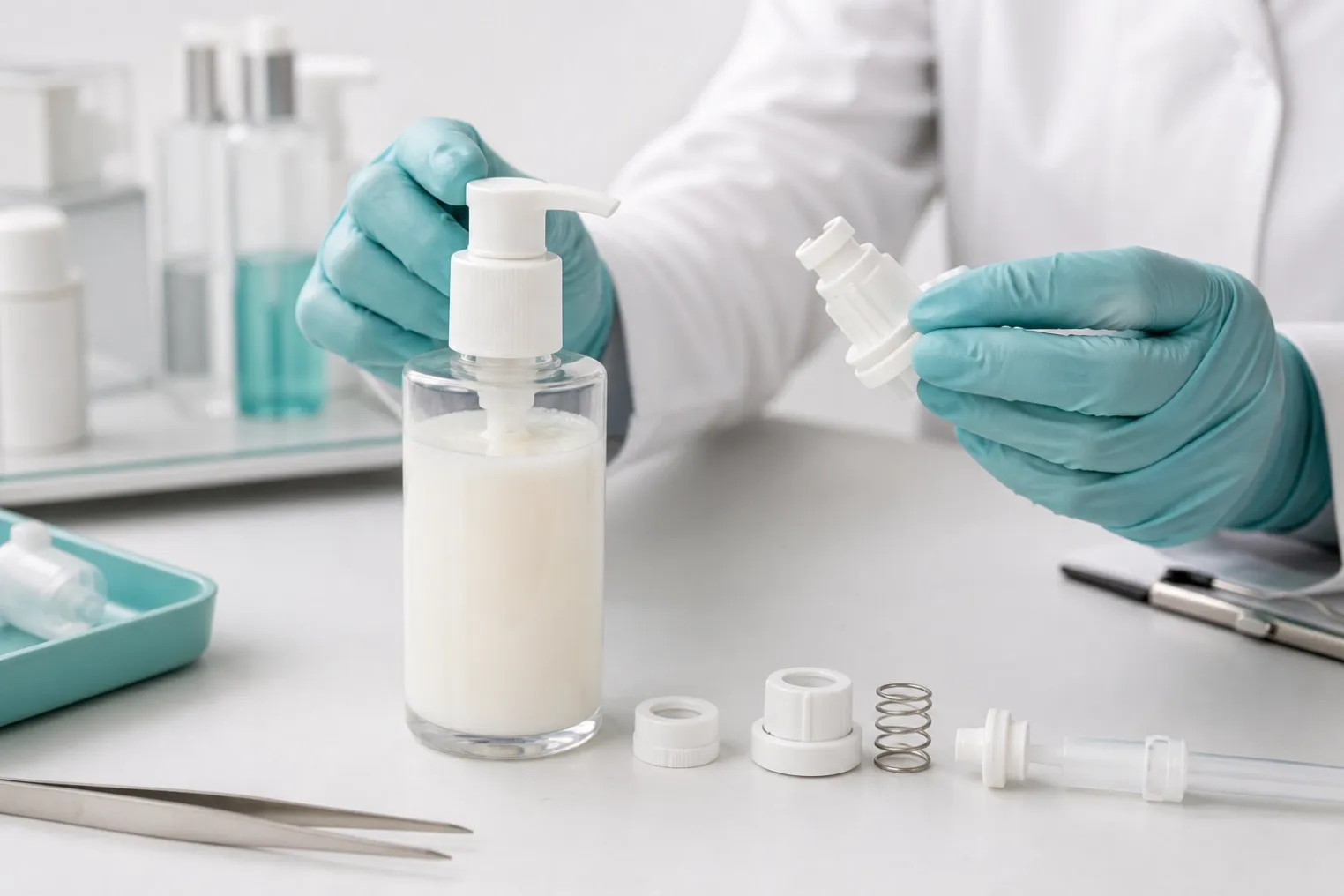
Spring force, chamber dimensions, piston fit, valve parts, and assembly quality influence the nominal dose and recovery. Damage from transport, storage, capping pressure, or mixing components from different specifications can create batch-to-batch differences.
Troubleshooting Table
Symptom | Likely factors | Checks to perform |
|---|---|---|
Small doses only at the beginning | Incomplete priming, empty dip tube | Define priming strokes; observe when continuous product reaches the chamber |
Output decreases during rapid pumping | Slow chamber refill, high viscosity, restricted vent | Increase time between strokes; test at relevant temperatures; inspect vent path |
Sputtering or bubbles | Air leak, loose dip tube, low fill level | Inspect tube fit and seals; compare upright and angled use; verify fill level |
Product remains at the bottle bottom | Tube too short, excessive bend, blocked cut end | Check tube length, cut angle, stiffness, and base clearance |
Variation between pumps | Component or assembly variation, damage | Test a representative sample across lots; inspect critical parts and capping process |
Output changes after storage | Formula interaction, separation, valve wetting, temperature | Condition filled packs; mix only if product instructions allow; repeat output testing over time |
How to Measure Pump Output Before Mass Production
Use a written method so results can be reproduced by the brand, supplier, and filling factory.
- Select representative pumps, bottles, and formula from identified lots.
- Fill to the intended production level and assemble using the planned capping process.
- Condition samples at relevant temperatures and orientations.
- Prime each pump using the same full-stroke procedure; record priming performance separately.
- Dispense a defined sequence of full strokes at a consistent rhythm into separate collection containers.
- Weigh each dose using a suitable calibrated balance, or use an agreed volumetric method when appropriate.
- Calculate average output and variation, then compare results with pre-agreed acceptance criteria.
- Repeat after storage, temperature conditioning, and distribution simulation when those risks apply.
The required sample size and limits depend on the product, pump specification, dosage expectations, and quality risk. Do not copy an arbitrary tolerance from another project without confirming that it fits the current package and formula.
What Buyers Should Specify to a Pump Supplier
- Formula type, viscosity range and test temperature
- Important oils, solvents, alcohol, surfactants, particles or actives that may affect compatibility
- Desired output per full stroke and acceptable variation
- Bottle capacity, neck finish, material, shoulder shape and base geometry
- Pump lock style, actuator design, dip-tube material, length and cut
- Fill level, headspace and expected product orientation during use
- Target markets, storage temperatures and distribution route
- Decoration, overcap and secondary-packaging requirements
- Sampling, pilot-run and production quality-control plan
- Traceability and change-control expectations for pump components
Common Testing Mistakes
Testing with water alone is a preliminary mechanical screen, not proof that a lotion formula will dispense consistently. Water does not reproduce the viscosity, recovery behavior, particles, or material interaction of the final product.
Another common mistake is measuring immediately after priming without defining the stroke speed or recovery interval. Operators can produce different results from the same pump. Fixtures may improve repeatability, but realistic hand-use testing remains useful for consumer experience.
Finally, do not approve only one “golden sample.” Test multiple units from representative lots and recheck performance after the package has been filled, stored, transported, and exposed to realistic temperatures.
Buyer Checklist Before Production Approval
- Is the target output defined for a complete stroke?
- Is the priming method documented separately from dose measurement?
- Was the final formula tested at realistic temperatures?
- Does the dip tube maintain clearance at the bottle base?
- Does the pump recover fully at the expected use rate?
- Were multiple pumps and component lots evaluated?
- Were filled packs retested after storage and distribution simulation?
- Are acceptance criteria and responsibilities agreed in writing?
- Does the filling line reproduce the sample-approval assembly conditions?
- Is there a process for investigating output drift during production?
Frequently Asked Questions
Why does a lotion pump work during sampling but fail after filling?
The production formula, fill temperature, capping process, storage time, or component lot may differ from the original sample conditions. Investigate the complete production system and compare it with the approved reference using controlled tests.
How do I know whether the formula is too viscous for the pump?
Test the final formula across the intended temperature range and measure chamber recovery and repeated full-stroke output. If output declines during normal use or priming becomes excessive, the pump flow path, engine, or formula-pump match may need adjustment.
What pump output should I specify before sampling?
Base the target on the intended consumer dose, product usage instructions, formula properties, and actuator experience. Ask the supplier for the pump's nominal output and agree on a test method and acceptable production variation before approval.
What should be tested before mass production?
Test priming, repeated-stroke output, recovery time, dispensing pattern, leakage, lock function, dip-tube performance, formula compatibility, temperature exposure, storage orientation, and the final shipping pack.
Can a dip tube cause inconsistent pump output?
Yes. A loose fit, split tube, excessive bend, insufficient length, blocked cut end, or poor clearance from the bottle base can introduce air or restrict product flow.
What information helps a supplier troubleshoot inconsistent output?
Provide the formula type and viscosity conditions, pump and bottle specifications, component lots, fill level, dip-tube details, priming method, measured stroke data, test temperature, videos of the symptom, and when the failure begins.
Request a Lotion Pump Compatibility Review
Send AC Packaging your formula type, viscosity range, bottle capacity and material, neck finish, desired pump output, dip-tube requirement, quantity, target market, and filling conditions. These details help narrow suitable pump options and define a practical sampling and compatibility-test plan before bulk production.