How to Choose Cosmetic Packaging for a New Skincare Brand
A practical skincare packaging guide covering formula, format, capacity, MOQ, budget, testing, and brand positioning for startup launches.
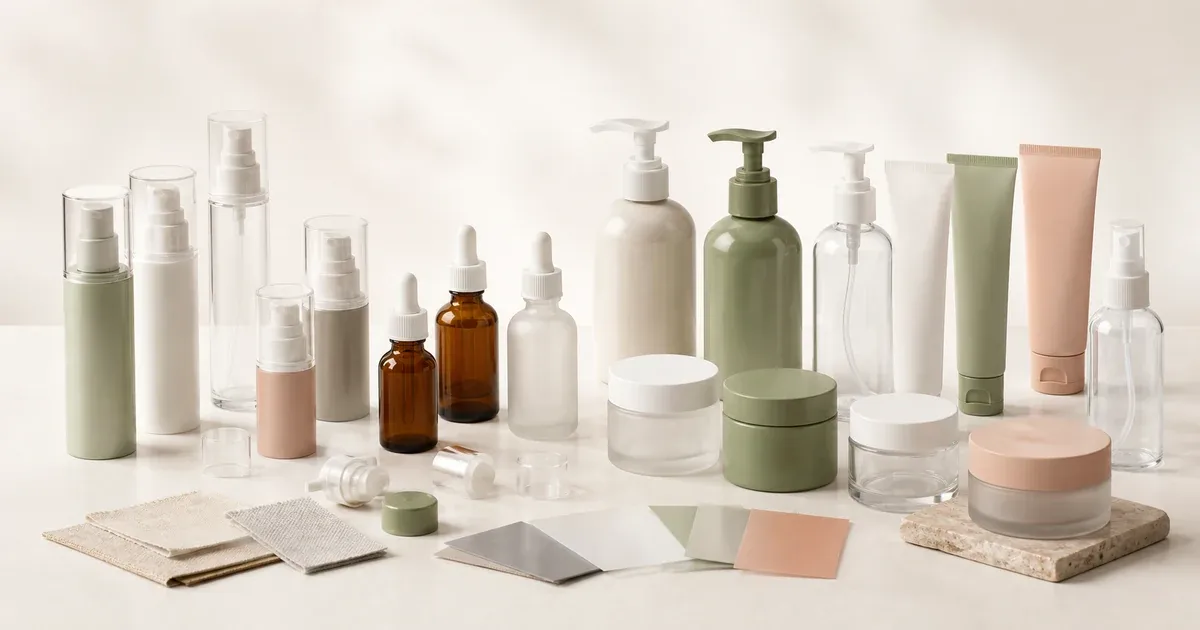
Packaging is one of the first major sourcing decisions for a new skincare brand. It protects the formula, controls dispensing, communicates price position, affects filling efficiency, and determines how much inventory must be purchased before launch. A beautiful package that leaks, blocks a pump, exceeds the budget, or requires an unrealistic minimum order can delay the entire project.
Quick answer: Choose skincare packaging by defining the product type, formula behavior, fill capacity, dispensing method, target customer, brand position, budget, sales forecast, and filling process. Shortlist existing molds first, test the complete package with the actual formula, and approve production only after confirming MOQ, decoration, quality standards, and lead time.
Start With the Product, Not the Package
The most useful skincare packaging guide begins with the product brief. Do not select a bottle or jar only because it looks attractive in a supplier catalog. Packaging must support the way the formula is made, filled, shipped, stored, dispensed, and used.
Prepare one brief for every SKU. Include the product category, texture, viscosity, fill volume, sensitive ingredients, expected dose, use frequency, storage orientation, destination markets, launch quantity, annual forecast, target retail price, and filling location. This allows the packaging supplier and contract filler to identify technical risks early.
Match the Format to the Product Type
| Product type | Common packaging options | Important checks |
|---|---|---|
| Serum | Dropper bottle, treatment pump, airless bottle | Dose, viscosity, oxygen exposure, pipette or pump compatibility |
| Face lotion | Airless bottle, lotion pump bottle, squeeze tube | Priming, evacuation, output, cap security, travel leakage |
| Cream or balm | Jar, airless jar, tube | Product access, hygiene, viscosity, inner lid, closure torque |
| Cleanser | Pump bottle, flip-top bottle, cosmetic tube | Foaming, orifice, squeeze force, pump output, shower use |
| Toner or mist | Screw-cap bottle, fine-mist bottle, treatment pump | Spray pattern, leakage, dose, formula filtration, cap retention |
| Eye treatment | Small airless bottle, precision tube, roller package | Low dose, applicator safety, priming, controlled dispensing |
The table is a starting point, not a compatibility guarantee. Two products described as “serum” can have completely different viscosities, oils, acids, particles, fragrances, or active ingredients. The final package must be tested with the actual formula.
Understand the Formula Before Selecting Materials
Formula composition affects the bottle, jar, tube, closure, liner, gasket, dip tube, pump engine, decoration, label, and adhesive. A package may look unchanged during a short sample review but develop leakage, swelling, stress cracking, discoloration, odor transfer, clogged dispensing, or decoration failure after longer contact.
Share relevant information with the packaging supplier under appropriate confidentiality arrangements. At minimum, identify whether the formula contains high levels of oil, alcohol, fragrance, essential oil, solvent, acid, alkaline material, suspended particles, or other ingredients that may affect packaging.
Common Plastic Materials
- PET: clear, lightweight, and commonly used for toner, cleanser, lotion, shampoo, and body-care bottles.
- PP: widely used for caps, pumps, airless systems, jars, and living-hinge closures.
- PE and HDPE: suitable for squeezable bottles and tubes, with different stiffness and barrier characteristics.
- PETG: provides clarity and a substantial premium appearance for selected skincare formats.
- PMMA: often used as a decorative outer layer in premium double-wall packages.
- PCR plastic: supports recycled-content objectives but requires evaluation of appearance, odor, supply consistency, color, and compatibility by grade and percentage.
Material name alone is not enough. Resin grade, color masterbatch, molding conditions, additives, and all product-contact components influence performance. Test production-representative samples rather than assuming every PET, PP, or PCR package behaves the same way.
Choose the Right Capacity
Capacity affects retail price, usage period, portability, decoration area, shipping cost, carton size, and customer expectations. New brands sometimes choose a large capacity to make the product appear more valuable, then discover that the formula is used too slowly, the package looks underfilled, or the shipping cost is too high.
Start with the recommended dose and expected use frequency. A product used twice daily at a small dose may need a very different package from a body lotion used generously. Confirm both nominal capacity and brimful capacity, because these are not the same. The filler also needs appropriate headspace for filling accuracy, pump installation, formula expansion, and clean closure application.
When possible, request filled samples or conduct a pilot fill. This reveals the real fill line, visual weight, balance, dispensing experience, and label position more accurately than an empty sample.
Define the Dispensing Experience
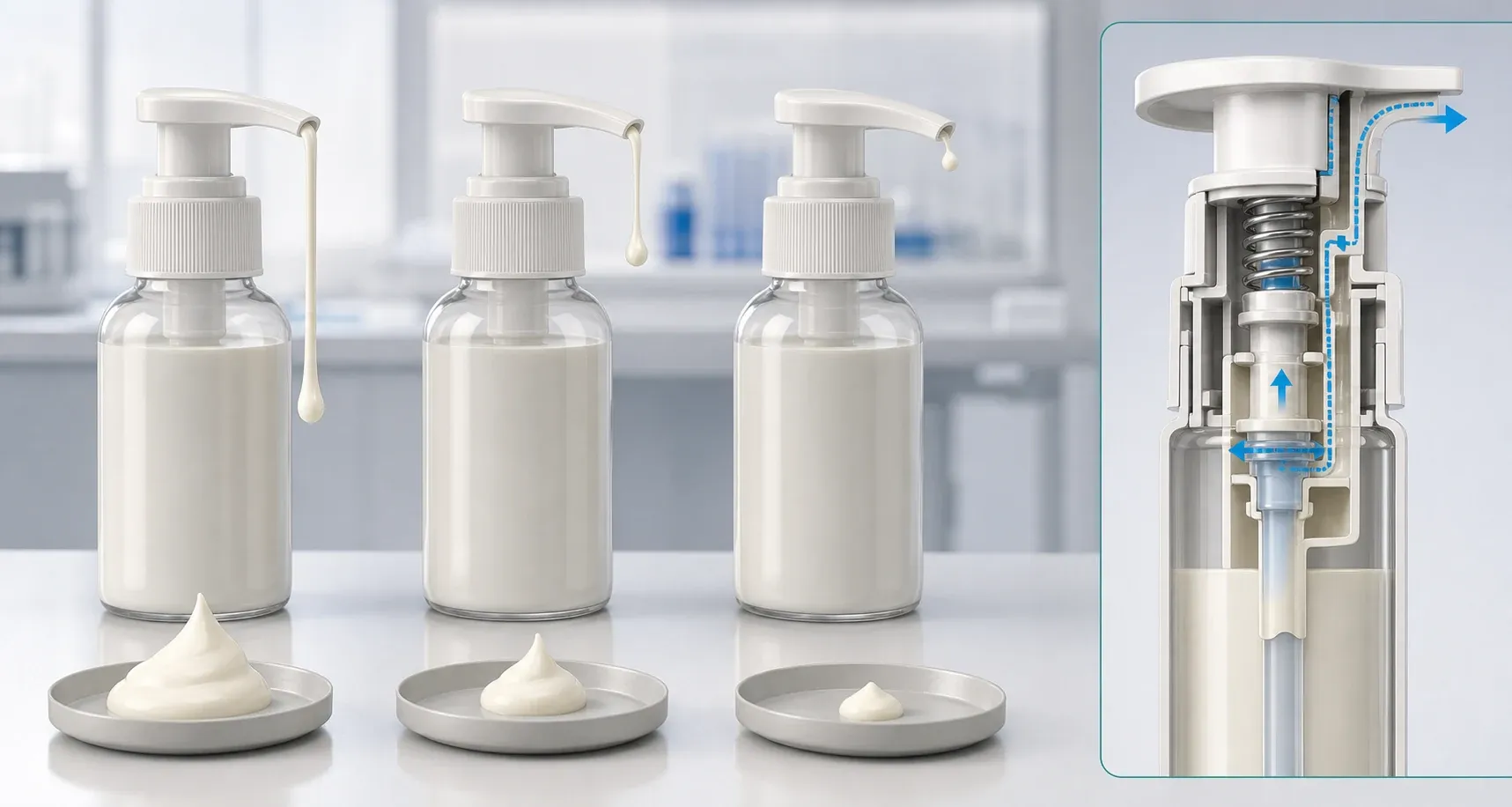
Dispensing is part of the product experience. The package must deliver an appropriate amount without excessive force, dripping, clogging, splashing, or leaving too much product behind.
- Dropper: visually familiar for serums and oils, but dose consistency and pipette compatibility require testing.
- Lotion pump: convenient for many liquid and lotion products; check output, locking, dip-tube length, and closure fit.
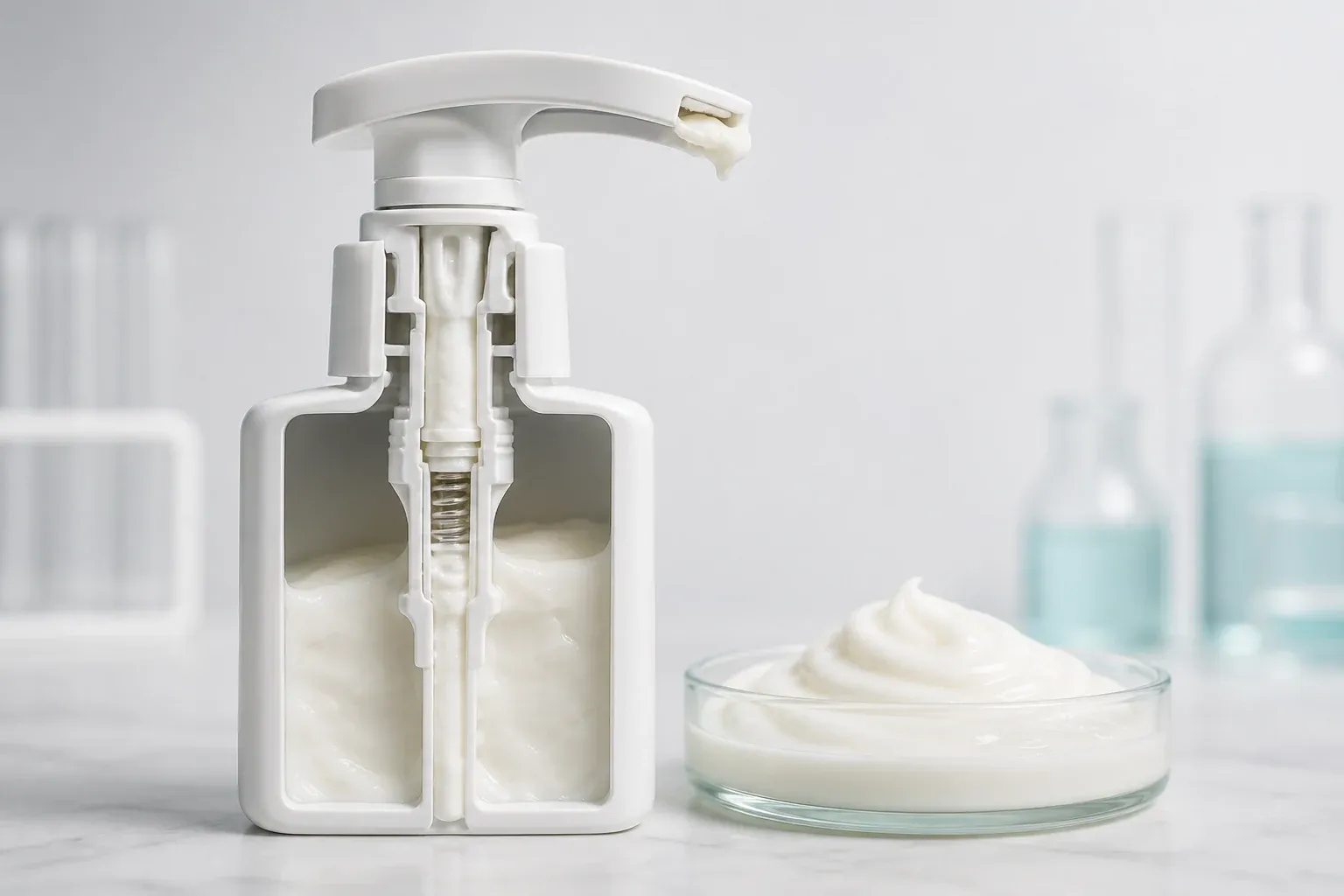
- Airless pump: supports controlled dispensing and reduced repeated air exposure; test priming and evacuation with the formula.
- Fine-mist sprayer: suitable for toner and facial mist when droplet size, spray pattern, and clogging are controlled.
- Tube or flip-top closure: practical for cleansers and creams; check squeeze force, orifice size, hinge durability, and leakage.
- Jar: easy to access for thick products but requires decisions about inner lids, spatulas, hygiene, and repeated exposure.
Ask the supplier for output data where available, then verify it independently. Pump output can vary with formula viscosity, temperature, priming, stroke speed, and component tolerances.
Set the Brand Position Before Choosing Decoration
Packaging selection should reflect the brand promise and target retail environment. A clinical skincare line may emphasize controlled dispensing, clarity, and precise details. A natural-positioned brand may prefer soft colors, tactile finishes, and simpler forms. A prestige line may use substantial double-wall components and complex decoration, while an accessible daily-care line may prioritize lightweight formats and efficient fulfillment.
Create three to five visual principles before requesting samples. Examples include “minimal and clinical,” “warm and accessible,” or “premium but not ornate.” Also define what the brand should not look like. This prevents the team from choosing unrelated packages only because each looks attractive individually.
Build a Coherent Packaging Family
A startup does not need a unique mold for every SKU. A coordinated family can be created with shared colors, cap styles, pump colors, artwork rules, and label proportions across existing bottle, jar, and tube molds. Component standardization can reduce development time, purchasing complexity, and replacement inventory.
Plan the Budget Beyond Unit Price
Cosmetic packaging for startups should be evaluated with a total landed-cost model. The lowest quoted bottle price may become expensive after decoration, sampling, tooling, component assembly, inspection, cartons, pallets, freight, duties, storage, defects, and filling-line losses are included.
| Cost area | Questions to ask |
|---|---|
| Primary package | Does the price include every pump, cap, liner, plug, overcap, and assembly step? |
| Decoration | What are the setup charges, color limits, minimums, rejection allowances, and sample costs? |
| Testing | Who pays for compatibility, transport, line trials, and replacement samples? |
| Tooling | Are color molds, fixtures, print plates, or custom molds required? |
| Logistics | What are the carton dimensions, volumetric weight, pallet plan, freight terms, and duties? |
| Inventory risk | How much cash and storage space will be tied up, and can components be shared across SKUs? |
Set a target packaging cost based on the planned retail price, sales channel, gross margin, fulfillment cost, and promotional strategy. Leave a contingency for sampling, revisions, testing, and freight changes. A packaging budget that uses every available dollar before testing is not resilient.
Understand MOQ Before Finalizing the Design
MOQ can determine whether a packaging concept is commercially realistic. Standard custom projects generally begin around 10,000 pieces, but actual minimums depend on the item, resin, custom color, pump or closure, decoration method, and production process. Different components in one package may have different MOQs.
Ask for the MOQ of the complete configuration, not only the bottle. A supplier may offer an existing bottle mold at one quantity while the custom-colored pump, hot-stamp foil, or printed carton requires a higher quantity.
Startup-Friendly Ways to Control MOQ
- Use an existing bottle, jar, or tube mold.
- Choose standard pump and closure models.
- Limit the number of custom colors and decoration passes.
- Use pressure-sensitive labels where technically appropriate.
- Share a bottle family, neck finish, pump, or cap across several SKUs.
- Launch fewer SKUs and validate demand before expanding the range.
“Low MOQ” should mean a practical minimum supported by the manufacturing process, not a universal promise for every custom feature. Compare the MOQ with the sales forecast, shelf life, cash flow, warehouse capacity, and likely design changes.
Existing Mold or Custom Mold?
Existing molds are usually the best starting point for a new skincare brand. They reduce tooling investment and allow the team to focus on formula testing, decoration, launch execution, and market feedback. Differentiation can come from color, printing, hot stamping, coating, frosting, metallization, labels, and coordinated secondary packaging.
A custom mold may be justified when the package shape or dispensing system is central to the brand, annual volume is sufficient, and the launch schedule allows time for engineering and trials. Custom development normally includes a design brief, industrial design, technical drawings, manufacturability review, tooling, trial samples, revisions, testing, and approval.
Before paying for tooling, document mold ownership, maintenance, storage, modification costs, expected mold life, replacement of wear parts, and acceptance criteria.
Testing Required Before a Packaging Order
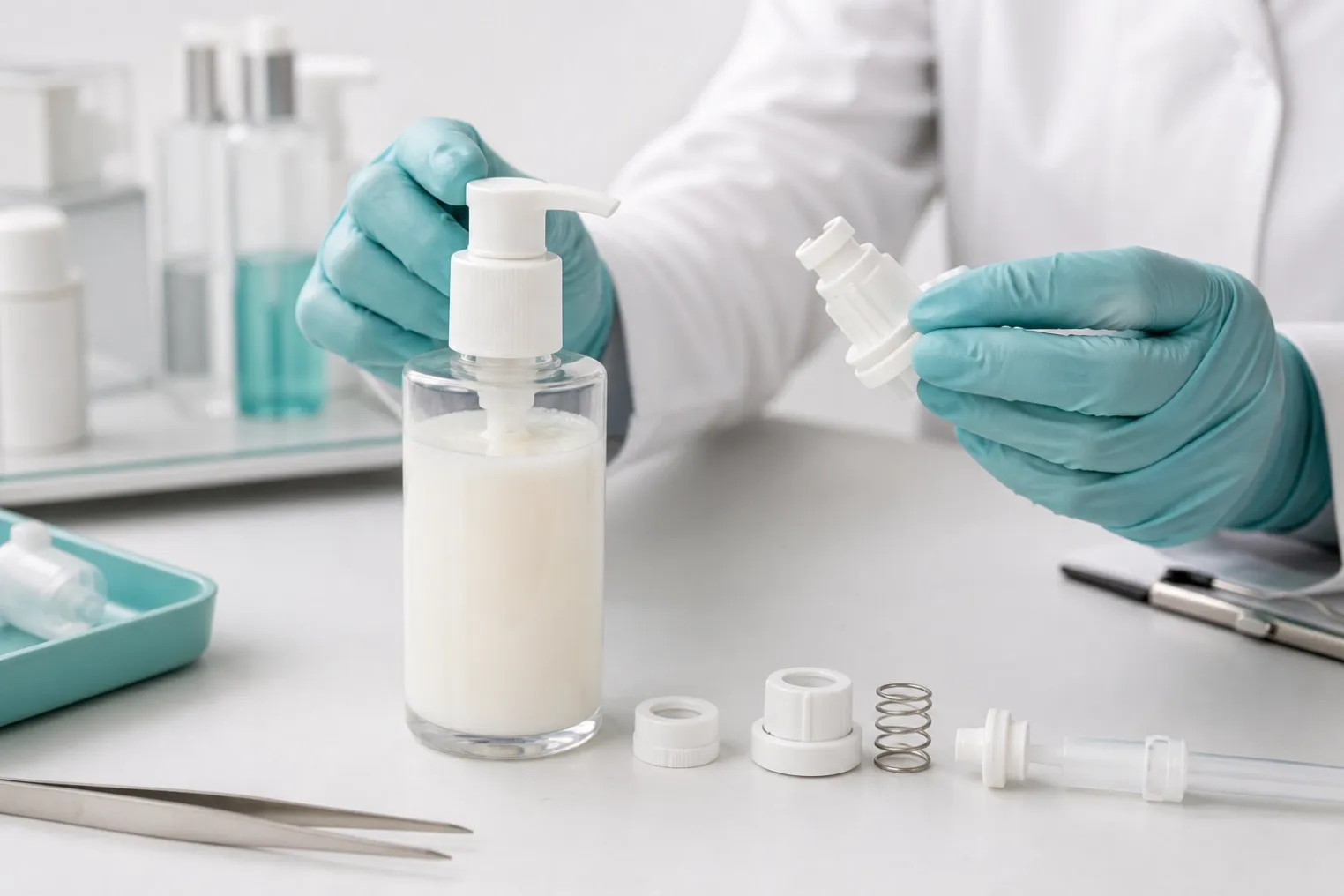
No packaging selection guide can replace project-specific testing. Use the actual formula and samples that represent production materials, decoration, and components.
- Formula compatibility and accelerated aging at defined temperatures
- Upright, inverted, and side-position leakage tests
- Pump priming, output consistency, clogging, spray pattern, and evacuation
- Closure torque, cap retention, hinge cycling, and drop resistance
- Decoration adhesion, abrasion, chemical resistance, and color stability
- Transport vibration, carton compression, and temperature cycling
- Filling-line trials for feeding, filling, capping, labeling, coding, and inspection
The brand, packaging supplier, contract filler, and laboratory should agree on sample size, duration, conditions, methods, and acceptance criteria. Record results and use change control if any material, mold, pump, liner, gasket, decoration, or component supplier changes.
How to Compare Packaging Suppliers
Send the same written brief to each shortlisted supplier. Compare technical understanding, product range, component matching, sample quality, documentation, customization, mold capability, quality control, export experience, communication, lead time, and total cost—not just unit price.
Ask whether the supplier manufactures the package directly or coordinates components from partner factories. Either model can work, but responsibility for assembly, testing, quality, traceability, and shipment release must be clear.
A Step-by-Step Packaging Selection Guide
- Define the formula, product type, dose, capacity, use environment, and filling process.
- Set the target customer, retail price, brand position, packaging budget, and sales forecast.
- Choose two or three technically suitable packaging formats.
- Request existing-mold options and complete component specifications.
- Review empty samples for appearance, handling, assembly, and decoration area.
- Test representative packages with the actual formula.
- Complete filling-line and transport trials.
- Confirm MOQ, cost, tooling, quality standards, packing, freight, and schedule.
- Approve signed samples, drawings, artwork, and change-control requirements.
- Begin production only after all technical and commercial approvals are documented.
How AC Packaging Supports New Skincare Brands
AC Packaging is a China-based cosmetic and skincare packaging supplier supporting beauty brands, startups, personal-care companies, and contract fillers. The range includes bottles, airless bottles, lotion bottles, dropper bottles, cream jars, cosmetic tubes, pumps, caps, closures, paper boxes, and related packaging components.
Customization may include color matching, logo printing, screen printing, hot stamping, coatings, metallization, water-transfer decoration, injection color, and custom mold development for suitable projects. The team can help buyers compare existing packaging options, coordinate components, prepare samples, and develop a production specification.
Frequently Asked Questions
What packaging should a new skincare brand start with?
Start with an existing mold that is technically suitable for the formula and filling process. Airless bottles, pump bottles, droppers, jars, and tubes each support different products. Existing molds reduce tooling risk, while coordinated colors, decoration, labels, and secondary packaging can still create a distinctive brand family.
How much should a startup budget for cosmetic packaging?
Budget for the total landed package rather than only the unit price. Include every component, decoration, samples, tooling, testing, inspection, cartons, pallets, freight, duties, storage, defects, and filling-line losses. Work backward from retail price and target margin, then keep contingency for revisions and logistics changes.
What is the typical MOQ for custom skincare packaging?
Standard custom projects generally start around 10,000 pieces. The actual MOQ depends on the package, resin, capacity, color, pump, closure, decoration, and production process. Ask for the minimum of the complete configuration, because a pump, printed decoration, or carton may have a different MOQ from the bottle.
Should a startup use bottles, jars, or tubes?
The choice depends on product texture, dose, use environment, compatibility, hygiene expectations, filling method, and brand position. Bottles support many liquid products, jars provide direct access to thick creams, and tubes are portable and practical for cleansers or creams. Test the selected format with the actual formula.
Is airless packaging always better for skincare?
No. Airless packaging can provide controlled dispensing and reduce repeated air exposure, but it costs more than some standard formats and must match the formula viscosity and filling method. Priming, output, evacuation, piston movement, and compatibility should be tested before deciding that airless is the best option.
Can a startup customize packaging without a new mold?
Yes. An existing mold can be customized with color, screen printing, hot stamping, labels, coating, frosting, metallization, water-transfer decoration, and coordinated pump or cap colors, subject to technical feasibility and MOQ. Physical decorated samples should be approved for color, position, adhesion, and abrasion before production.
What packaging tests are most important?
Priority tests include formula compatibility, leakage, pump or closure performance, decoration durability, transport resistance, and filling-line trials. Use the actual formula and production-representative packaging. Define test time, temperature, orientation, sample size, and acceptance criteria with the supplier, filler, and laboratory before testing begins.
What information should be sent to a packaging supplier?
Send the product type, formula category, viscosity, fill volume, preferred format, material, dispensing needs, brand positioning, decoration, quantity, annual forecast, budget, destination, filling-line constraints, and launch date. Reference images help communicate style, but technical requirements and test results should drive final approval.
Request Packaging Recommendations for Your Skincare Launch
Contact AC Packaging with your product brief, formula type, capacity, preferred format, target price position, estimated quantity, decoration concept, and launch schedule. The team can recommend existing packaging options or assess whether a custom mold program is appropriate for your new skincare brand.