Cosmetic Bottle Manufacturer for Skincare and Personal Care
Source cosmetic bottles for skincare and personal care with material, pump, testing, wholesale, customization, MOQ, and custom mold guidance.
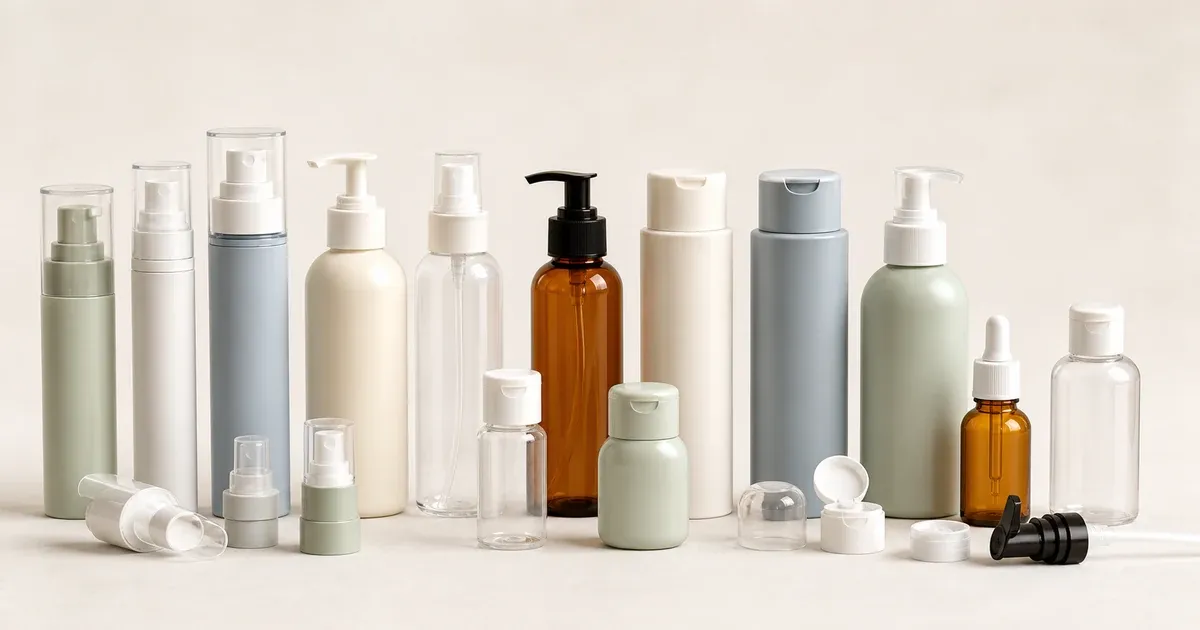
Choosing a cosmetic bottle manufacturer for skincare and personal care requires more than finding an attractive bottle at a competitive price. Brands and contract fillers must confirm that the bottle, closure, pump, decoration, formula, filling line, shipping method, and destination market work together as one packaging system. The best sourcing decision balances brand presentation with dispensing performance, manufacturing repeatability, testing, and reliable scale-up.
Quick answer: Select a cosmetic bottle manufacturer by matching the bottle material, neck finish, closure, pump output, capacity, decoration, and filling-line requirements to your actual formula. Request production-representative samples, complete compatibility and transport testing, define inspection standards, and approve signed samples before placing a wholesale order.
What Does a Cosmetic Bottle Manufacturer Supply?
A cosmetic bottle manufacturer produces or coordinates empty primary packaging for skincare, haircare, body care, and personal-care products. The scope may include PET, PP, PE, HDPE, PETG, PMMA, and PCR bottles; airless systems; lotion and treatment pumps; fine-mist sprayers; droppers; flip-top and disc-top closures; screw caps; overcaps; inner plugs; and matching secondary packaging.
This role is different from that of a cosmetic formulation laboratory or contract filling factory. A packaging supplier recommends components and supports packaging development, while the brand and filler remain responsible for the finished formula, filling process, product testing, labeling, and market compliance. Early cooperation among all three parties prevents many expensive problems.
AC Packaging supports beauty brands, personal-care companies, startups, and filling factories with existing bottle designs, custom colors and decoration, component matching, wholesale production, and custom mold development for suitable projects.
Cosmetic Bottle Types for Skincare and Personal Care
The correct bottle format depends on the product viscosity, dose, consumer use, oxygen sensitivity, filling method, and brand position. A packaging format should never be selected only from a catalog photograph.
| Bottle format | Common applications | Key purchasing checks |
|---|---|---|
| Airless bottle | Serums, treatment lotions, eye care, sensitive formulas | Priming, evacuation rate, output, piston travel, formula viscosity |
| Lotion pump bottle | Face lotion, body lotion, hand care, shampoo | Pump output, lock type, dip-tube cut, leakage, neck match |
| Fine-mist bottle | Facial mist, toner, hair mist, body spray | Spray pattern, droplet size, clogging, actuator force, formula filtration |
| Dropper bottle | Facial oils, concentrated serums, scalp treatments | Bulb compatibility, pipette fit, dose consistency, wiper or plug |
| Flip-top or disc-top bottle | Cleanser, shampoo, conditioner, body wash | Orifice size, hinge durability, squeeze force, inversion leakage |
| Screw-cap bottle | Toner, refill, oil, travel products | Liner, plug, torque, tamper evidence, controlled pouring |
Airless Bottles
Airless packaging can reduce repeated air exposure and provide controlled dispensing, but it must be evaluated with the real formula. Product viscosity, trapped air, particle content, filling level, and the airless engine design affect priming and evacuation. Buyers should test the complete assembled package in the intended orientation and temperature range.
Pump and Spray Bottles
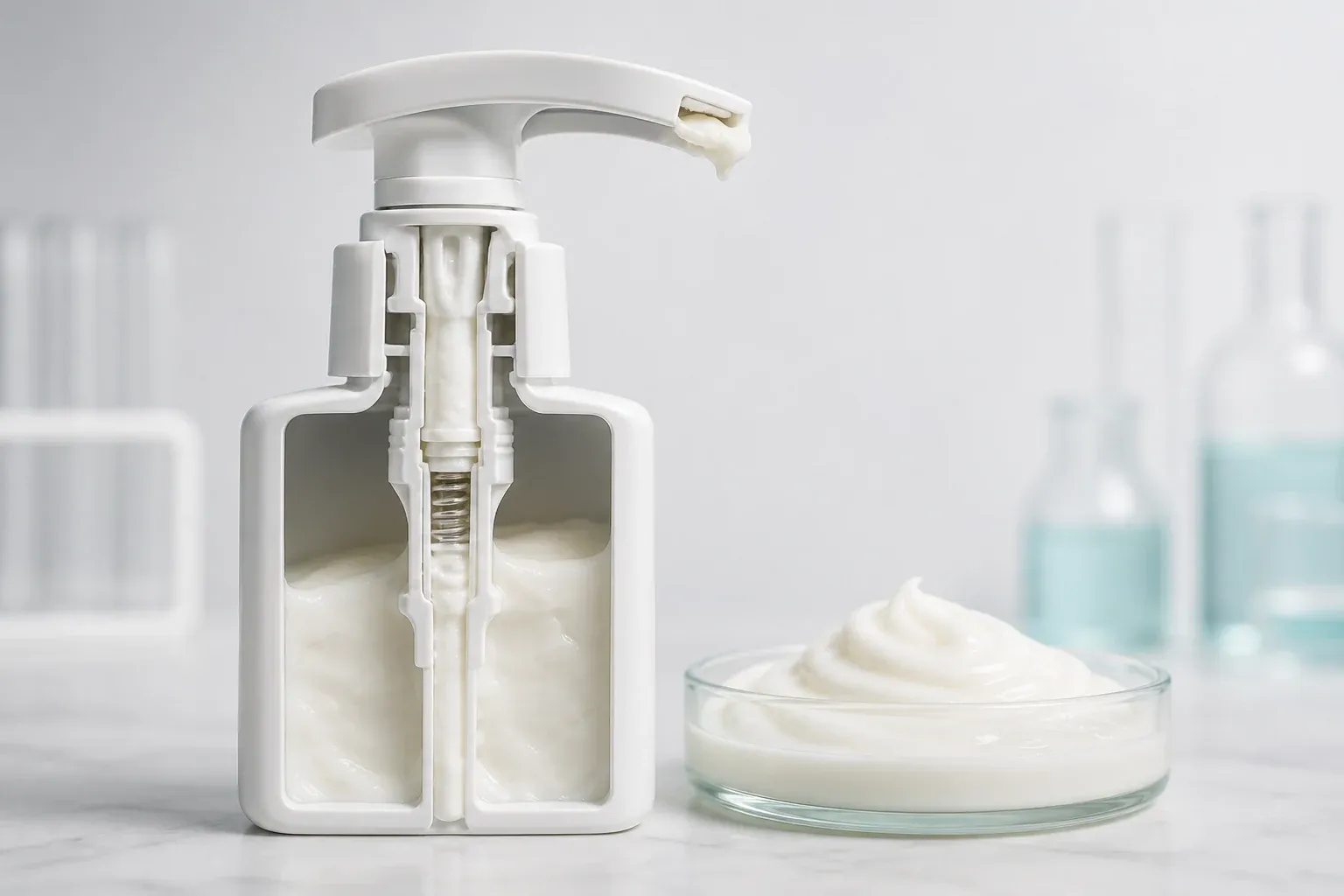
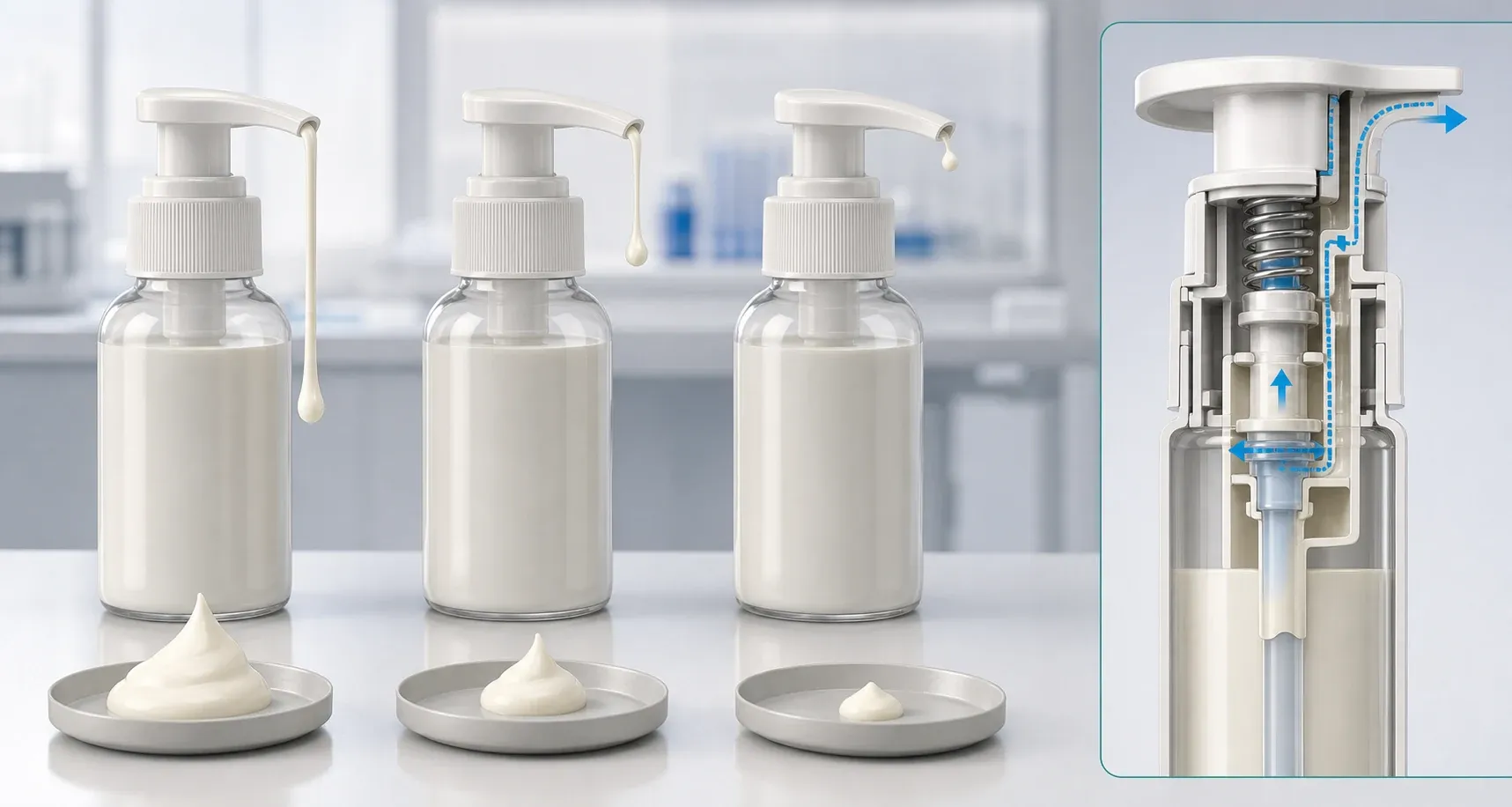
A pump is a precision component, not a generic accessory. Output per stroke, spring system, gasket material, dip-tube length, actuator geometry, lock design, and closure torque influence performance. Contract fillers should confirm that the selected pump can be handled, tightened, and tested consistently on the production line.
Flip-Top and Squeeze Bottles
PE and HDPE bottles are common for squeezable personal-care formats. Bottle wall thickness, resin grade, shoulder shape, orifice diameter, closure hinge, and formula viscosity all affect consumer experience. A package that is too rigid may be difficult to dispense, while a very soft bottle may panel or deform in transport.
How to Choose the Right Bottle Material
A plastic cosmetic bottles supplier should explain the practical differences among materials instead of recommending one resin for every project.
- PET: clear, lightweight, and widely used for toner, cleanser, lotion, shampoo, and body-care bottles.
- PP: commonly used for closures, pumps, airless components, and packages requiring good hinge performance.
- PE and HDPE: suitable for squeezable bottles and many household-size personal-care products.
- PETG: offers high clarity and a premium appearance for selected skincare formats.
- PMMA: often used as a decorative outer component in premium packaging systems.
- PCR plastic: can support recycled-content objectives, but color, odor, appearance, supply consistency, and formula compatibility must be evaluated by grade and percentage.
Material selection is only the starting point. Color masterbatch, additives, decoration, adhesives, liners, gaskets, pump parts, and contact surfaces can also interact with the product. The final decision should be based on representative package testing rather than resin name alone.
Wholesale Cosmetic Bottles: Define the Complete Specification
When requesting cosmetic bottles wholesale, compare suppliers using the same written specification. A quotation that says only “100 ml PET bottle with pump” leaves too much room for misunderstanding. The specification should identify every critical component and acceptance point.
- Bottle drawing, nominal and brimful capacity, weight, material, color, and neck finish
- Pump or closure model, material, output, lock type, gasket, liner, and dip-tube length
- Decoration artwork, Pantone reference, print area, finish, adhesion standard, and approved sample
- Order quantity, packing method, carton requirements, palletization, and destination
- Inspection level, functional tests, acceptable tolerances, and defect classification
- Sample, tooling, production, quality-control, and shipping schedule
For multi-SKU programs, identify which components are shared. Standardizing a neck finish or pump across several bottles can simplify purchasing, filling-line setup, spare parts, and inventory. However, shared components still require confirmation on every bottle and formula combination.
Customization Options for Beauty and Personal-Care Brands
Custom cosmetic bottles can be developed from an existing mold or through a new tooling program. Existing molds usually reduce development cost and time. Brands can create differentiation through bottle color, pump color, cap design, screen printing, hot stamping, labeling, coating, frosting, metallization, water-transfer decoration, and coordinated secondary packaging.
Decoration must be treated as a functional specification. Screen-printed artwork requires approval for position, opacity, registration, adhesion, and abrasion resistance. Hot stamping needs defined foil color, coverage, and edge quality. Coatings should be tested for scratching, chemical resistance, color variation, and interaction with labels or filling-line guides.
Do not approve decoration from a digital rendering alone. Review physical, production-representative samples under consistent lighting and keep a signed master sample for mass-production comparison.
MOQ and Production Planning
MOQ depends on the bottle, resin, capacity, color, pump or closure, decoration process, and production method. Standard custom projects generally start around 10,000 pieces, but the actual minimum must be confirmed for each item and decoration. A stock-color bottle with a standard closure may have a different minimum from a custom-colored package with several printing passes.
For emerging brands, a practical launch strategy is to use an existing mold, select one bottle color, minimize decoration passes, and share components across SKUs. This can reduce technical risk and inventory exposure without making an unrealistic promise of universally low MOQs.
Contract fillers should also confirm component overage. Bottles, pumps, labels, and cartons may have different production yields. Agree on how shortages, defects, spare parts, and line-test quantities will be handled before production begins.
Custom Bottle Mold Development
A custom mold can create a proprietary silhouette, dispensing feature, capacity, or component system. It is appropriate when the expected sales volume and brand value justify tooling, trials, testing, and a longer development schedule.
- Prepare a design brief covering product, capacity, dimensions, filling line, decoration, target cost, annual forecast, and destination markets.
- Review industrial design and manufacturability with the packaging supplier.
- Approve technical drawings, materials, component interfaces, and tooling terms.
- Build the mold and inspect trial samples for dimensions, appearance, assembly, and function.
- Test the complete package with the actual formula and filling process.
- Approve signed samples and written quality standards before mass production.
The tooling agreement should define ownership, storage, maintenance, expected mold life, modification costs, replacement of wear parts, and the conditions for moving or retiring the mold.
Compatibility and Performance Testing
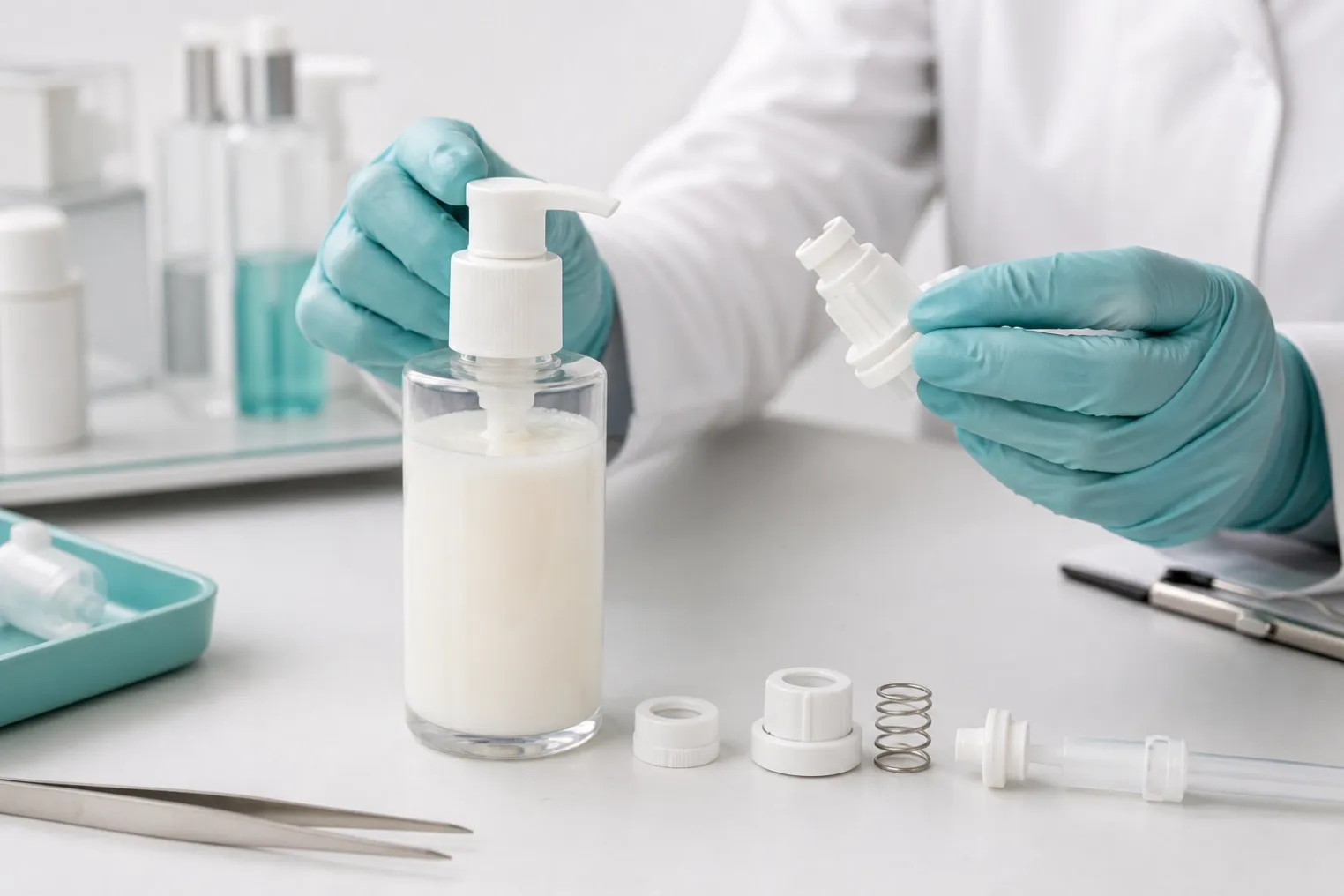
No skincare bottle manufacturer can guarantee compatibility from a photograph, material name, or general statement. The actual formula may cause swelling, stress cracking, discoloration, odor transfer, leakage, pump blockage, reduced output, or decoration failure. Testing should use samples that represent production materials and decoration.
Recommended Test Checklist
- Formula contact and accelerated aging at defined temperatures
- Upright, inverted, and side-position leakage checks
- Pump priming, dose consistency, spray pattern, clogging, and evacuation
- Closure torque, cap retention, hinge cycling, and drop performance
- Decoration adhesion, abrasion, chemical resistance, and color stability
- Transit, vibration, carton compression, and temperature-cycle testing
- Filling-line trials for feeding, filling, capping, labeling, coding, and inspection
The brand, filler, laboratory, and packaging supplier should agree on test methods, sample size, duration, storage conditions, and acceptance criteria. Keep written records and do not replace a tested component without change control and re-evaluation.
Quality Control for Bulk Bottle Orders
Reliable quality control begins before production. Approved drawings and signed samples should define dimensions, color, surface finish, print position, assembly, and function. Inspection criteria should distinguish critical, major, and minor defects.
Typical checks include bottle weight and dimensions, neck finish, capacity, color variation, black spots, scratches, deformation, pump output, dip-tube length, closure fit, leakage, printing adhesion, carton quantity, and shipping marks. The inspection plan should reflect how a defect affects filling, product protection, consumer safety, appearance, or saleability.
Ask how the supplier controls incoming resin and components, in-process production, decoration, assembly, final inspection, traceability, and retained samples. If several factories supply components, confirm who owns final system compatibility and shipment release.
What Contract Fillers Should Confirm
Contract fillers are important technical stakeholders because a package that works by hand may still fail at production speed. Before approving a bottle program, the filler should review bottle stability, conveyor handling, filling nozzle clearance, foaming, headspace, closure application, torque, pump feeding, label panels, coding areas, leak detection, and case packing.
Provide the packaging supplier with line constraints early. A small adjustment to bottle diameter, base geometry, dip tube, closure, or label area may prevent repeated stoppages. Schedule a pilot run before the full packaging order is consumed.
Why Work With AC Packaging?
AC Packaging is a China-based cosmetic and skincare packaging supplier serving international beauty brands, personal-care companies, startups, and contract fillers. The product scope includes cosmetic bottles, airless bottles, lotion bottles, droppers, jars, tubes, pumps, caps, closures, paper boxes, and related packaging components.
Customization may include color matching, logo application, screen printing, hot stamping, coatings, metallization, water-transfer decoration, injection color, and custom mold development. The team can help buyers compare existing molds, coordinate bottle and dispensing components, prepare samples, and define a production specification for wholesale orders.
Pre-Order Checklist
- Share the formula category, viscosity, fill volume, and special ingredients.
- Confirm bottle, pump, closure, liner, gasket, dip tube, and overcap as one system.
- Provide filling-line dimensions, torque requirements, and labeling constraints.
- Approve materials, colors, decoration artwork, and signed physical samples.
- Complete compatibility, dispensing, leakage, transit, and line trials.
- Agree on MOQ, price, tooling, overage, payment, production, inspection, and freight.
- Document change-control requirements for materials, suppliers, molds, and components.
Frequently Asked Questions
What products can a cosmetic bottle manufacturer supply?
A full-service supplier may provide airless bottles, lotion-pump bottles, mist-spray bottles, dropper bottles, squeeze bottles, screw-cap bottles, pumps, caps, closures, overcaps, inner plugs, and matching jars or tubes. The exact range varies, so buyers should verify whether the supplier manufactures the item directly or coordinates qualified component partners.
What is the MOQ for wholesale cosmetic bottles?
Standard custom projects generally start around 10,000 pieces. MOQ varies by bottle model, material, capacity, custom color, pump, closure, decoration, and production process. Existing molds and standard components can be more accessible than a new mold. Request an item-specific quotation based on one complete packaging specification.
Which plastic is best for skincare bottles?
There is no single best plastic for every formula. PET offers clarity and broad design flexibility; PE and HDPE support squeezable formats; PP is common in closures and airless systems; PETG and PMMA can create premium effects; PCR supports recycled-content goals. Final selection requires testing with the real formula and all contact components.
Can AC Packaging customize bottle colors and logos?
Yes, subject to the selected bottle, technical feasibility, decoration process, and MOQ. Options may include custom color, screen printing, hot stamping, labeling, coating, frosting, metallization, water-transfer decoration, and coordinated pump or cap colors. Physical decorated samples should be approved before mass production.
Can a supplier develop a custom cosmetic bottle mold?
Custom mold development is available for suitable projects. Buyers should provide capacity, dimensions, design references, filling-line requirements, target cost, annual demand, and schedule. The program normally includes drawings, manufacturability review, tooling, trials, testing, and approval. Tool ownership and maintenance terms should be documented before payment.
How should bottles be tested with a skincare formula?
Fill production-representative bottles with the actual formula and test them under defined time, temperature, orientation, and transport conditions. Evaluate leakage, swelling, stress cracking, discoloration, odor, pump output, clogging, evacuation, closure torque, and decoration. The brand, filler, laboratory, and supplier should agree on written acceptance criteria.
What information is needed for a bottle quotation?
Provide the bottle type, capacity, material, neck finish, pump or closure, formula category, color, decoration, quantity, annual forecast, destination, packing method, and target delivery date. Include artwork, reference images, filling-line constraints, and testing requirements. A complete brief produces a more accurate quotation and schedule.
How can contract fillers reduce packaging-line problems?
Review the packaging before purchase and perform a pilot run. Confirm bottle stability, conveyor handling, filling-nozzle clearance, foaming, capping torque, pump feeding, label application, coding, leak detection, and case packing. Share line constraints with the packaging supplier early and control any later component or material changes.
Request a Cosmetic Bottle Proposal
Contact AC Packaging with your product category, formula type, fill volume, preferred bottle and dispensing system, decoration concept, estimated order quantity, destination market, and launch schedule. The team can recommend existing bottle options or evaluate a custom mold program for your skincare or personal-care project.